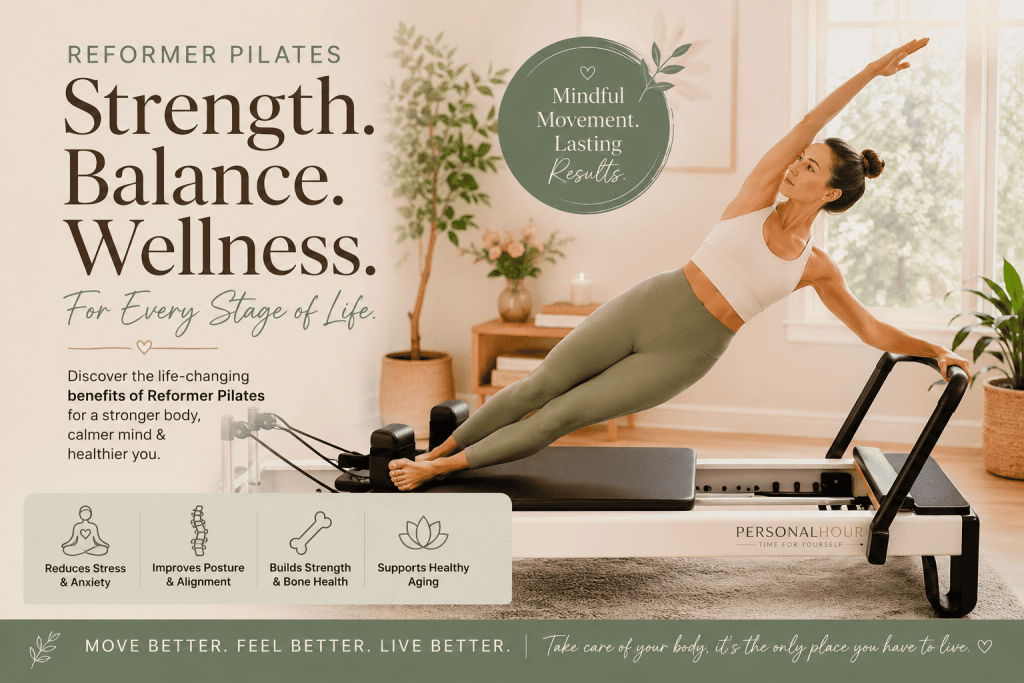

There comes a point in many women’s wellness journeys when we begin to look at exercise a little differently.
Instead of asking, “How many calories did I burn?” we start asking deeper questions.
“Does this movement leave me feeling stronger?”
“Does it support my body instead of exhausting it?”
“Is this something I can realistically enjoy for years to come?”
For me, wellness has never been about chasing perfection or following the latest fitness trend. At Holistic Wellness Hub, I’ve always believed that true health is built through small, intentional choices that nourish both body and mind.
It’s choosing movement that energizes rather than depletes.
It’s learning to listen to your body instead of constantly trying to push past it.
And perhaps most importantly, it’s creating daily habits that feel sustainable enough to become part of your life—not just another item on your to-do list.
That philosophy is one of the reasons Pilates continues to resonate with so many women around the world.
Whether you’re navigating a busy career, caring for young children, supporting ageing parents, recovering from an injury, or embracing the beautiful transition into midlife and menopause, Pilates offers something wonderfully refreshing: an opportunity to move with intention.
Rather than demanding intensity, it encourages awareness.
Rather than punishing your body, it teaches you to work with it.
It’s a form of exercise that strengthens muscles, improves posture, enhances flexibility, and supports balance—all while encouraging slower, more mindful movement.
Perhaps that’s why Pilates has experienced remarkable growth over the past decade. More people are beginning to realise that wellness isn’t always about doing more. Sometimes it’s about choosing practices that help us feel calmer, stronger, and more connected to ourselves.
What Is Reformer Pilates?
If you’re new to Pilates, you may have heard people talking about “Reformer Pilates” and wondered what makes it different from a traditional Pilates mat class.
A Pilates reformer is a specialised piece of equipment featuring a sliding carriage attached to adjustable springs that create varying levels of resistance. During a workout, you’ll perform controlled movements while lying down, sitting, kneeling, or standing on the machine.
Although it may look intimidating at first glance, the reformer is designed to support your body throughout each movement.
The adjustable resistance allows exercises to be modified for beginners while also providing enough challenge for experienced practitioners.
Unlike many forms of exercise that rely on heavy impact or repetitive movements, reformer Pilates focuses on quality over quantity. Every exercise is performed slowly and deliberately, with close attention to breathing, posture, alignment, and muscle control.
This mindful approach is one of the reasons Pilates appeals to such a wide range of people—from complete beginners to elite athletes, older adults, and women seeking a gentle yet effective way to stay active.
Why More Women Are Choosing Pilates
One of the questions I hear most often is:
“Is Pilates really enough exercise?”
The answer depends on your goals, but for many women, Pilates provides an excellent foundation for lifelong health.
Instead of concentrating on just one aspect of fitness, Pilates develops several essential components of physical wellbeing at the same time.
With consistent practice, many people experience improvements in:
- Core strength
- Posture and spinal alignment
- Flexibility
- Balance and coordination
- Joint mobility
- Functional strength for everyday activities
- Body awareness
- Breathing efficiency
- Stress management
These aren’t simply fitness goals.
They’re qualities that help us move through everyday life with greater confidence and ease.
Whether you’re lifting shopping bags, carrying a toddler, working at a desk all day, gardening, travelling, or simply wanting to feel stronger climbing stairs, these improvements can make everyday life feel noticeably easier.
What Does the Science Say?
One of the things I appreciate most about Pilates is that its benefits extend beyond personal stories and anecdotal experiences. Researchers have spent decades studying its effects on physical function, pain management, balance, and overall wellbeing.
A large systematic review published in the Cochrane Database of Systematic Reviews found that Pilates can help reduce pain and improve functional ability in people living with chronic lower back pain. For millions of adults affected by persistent back discomfort, this is encouraging evidence that gentle, structured movement may play an important role in long-term management.
Another review published in the Archives of Physical Medicine and Rehabilitation concluded that Pilates can improve balance, lower-body strength, flexibility, and functional mobility, particularly in older adults. These improvements become increasingly important as we age, helping us maintain independence and confidence in everyday movement.
Research has also explored Pilates’ effects on emotional wellbeing. A systematic review published in Complementary Therapies in Medicine reported improvements in mood, quality of life, and perceived stress among participants who practised Pilates regularly.
While no single exercise is a miracle solution, the growing body of evidence suggests that Pilates offers meaningful benefits for both physical and mental health when practised consistently.
That’s an important distinction.
The goal isn’t perfection.
It’s consistency.
Why Core Strength Matters More Than Many People Realise
When most people hear the phrase core strength, they immediately think of toned abdominal muscles.
In reality, your core is much more than that.
It includes a complex network of muscles surrounding your abdomen, lower back, pelvis, diaphragm, and hips that work together to stabilise your entire body.
A strong core supports nearly every movement you make throughout the day.
It helps you maintain good posture while sitting at your computer.
It supports your spine when lifting groceries.
It helps improve balance while walking on uneven surfaces.
It even contributes to healthier breathing patterns because your diaphragm is part of your core system.
Pilates places particular emphasis on strengthening these deep stabilising muscles rather than simply building visible muscle definition.
That functional strength often translates into better movement patterns in everyday life.
A Gentle Form of Exercise That Meets You Where You Are
One of my favourite things about Pilates is that it isn’t reserved for a particular age or fitness level.
You don’t have to be flexible.
You don’t have to be athletic.
You don’t need previous exercise experience.
Pilates meets you exactly where you are.
Some days your body feels energetic.
Other days it asks for gentleness.
Both are okay.
This compassionate approach to movement aligns beautifully with the philosophy I try to share here at Holistic Wellness Hub.
Our bodies are not machines.
They change throughout the seasons of our lives.
Hormonal shifts, pregnancy, menopause, stress, illness, injury, ageing, and even busy schedules all influence how we feel from one day to the next.
Choosing movement that honours those changes isn’t a sign of weakness.
It’s an act of wisdom.
Pilates Through Every Season of a Woman’s Life
One of the reasons I believe Pilates has remained so popular for nearly a century is because it grows with you.
Our bodies are constantly changing. The movement practices that served us well in our twenties may not always feel supportive in our forties, fifties, or beyond. Hormonal changes, busy schedules, pregnancy, motherhood, menopause, injuries, and the natural ageing process all influence how we move and how we feel.
Rather than expecting us to fit into a rigid exercise programme, Pilates can be adapted to meet us exactly where we are.
That flexibility is one of its greatest strengths.
Whether you’re rebuilding strength after having children, looking for gentle ways to stay active during perimenopause, or simply hoping to maintain your mobility as you age, Pilates offers a sustainable approach that can evolve alongside your body.
Why Pilates Can Be Especially Beneficial for Women Over 40
As women enter their forties and fifties, many begin to notice changes that can make traditional workouts feel more challenging.
You may experience:
- Increased joint stiffness
- Loss of muscle mass
- Changes in balance
- Reduced flexibility
- Slower recovery after exercise
- Hormonal fluctuations affecting energy and sleep
These changes are completely natural, but they also highlight the importance of choosing movement that supports long-term health rather than simply chasing short-term results.
Pilates places emphasis on controlled strength, posture, flexibility, and balance—all of which become increasingly important with age.
Research published in the Journal of Aging and Physical Activity suggests that regular strength and balance training can help older adults maintain functional independence and reduce the risk of falls. Pilates incorporates many of these essential movement patterns in a low-impact way, making it an appealing option for women who want to stay active without placing excessive stress on their joints.
For me, healthy ageing isn’t about trying to stop the clock.
It’s about giving our bodies the support they deserve so we can continue enjoying the people, places, and activities we love.
Can Pilates Help During Perimenopause and Menopause?
This is one of the questions I receive most often from readers.
While Pilates isn’t a treatment for menopause, it can become a valuable part of a holistic wellness routine during this stage of life.
Regular movement may help support:
- Muscle strength
- Bone health when combined with weight-bearing exercise
- Joint mobility
- Better posture
- Improved balance
- Reduced stress
- Better sleep quality
- Overall quality of life
Many women also appreciate the calming nature of Pilates.
Unlike workouts that leave you feeling depleted, Pilates encourages mindful breathing and slower, more intentional movement. For women experiencing the emotional ups and downs that sometimes accompany hormonal changes, this combination of movement and mindfulness can feel especially nourishing.
Every woman’s experience is unique, so it’s always wise to speak with your healthcare provider if you have concerns or underlying medical conditions.
Pilates and Stress: Caring for More Than Your Muscles
One of my favourite aspects of Pilates has very little to do with physical fitness.
It’s the way it invites us to slow down.
In our busy lives, it’s easy to rush from one responsibility to the next without ever checking in with ourselves.
Pilates gently interrupts that cycle.
Each movement asks you to notice your breathing.
To pay attention to your posture.
To become aware of how your body feels in the present moment.
This mindful approach is one reason many people describe Pilates as a form of moving meditation.
Emerging research has shown that mind-body exercises such as Pilates may help improve mood and reduce perceived stress. While more research continues to emerge, many participants report feeling calmer, more focused, and more connected to their bodies after regular practice.
Sometimes, those quiet moments of intentional movement become just as valuable as the physical benefits themselves.
Reformer Pilates vs. Mat Pilates: Which Is Right for You?
If you’re exploring Pilates for the first time, you might wonder whether you need a reformer or if a simple mat workout is enough.
The truth is that both approaches have wonderful benefits.
Mat Pilates uses your own body weight for resistance and requires very little equipment. It’s accessible, affordable, and a great way to learn the fundamentals of Pilates.
Reformer Pilates, on the other hand, introduces spring-based resistance through a specialised machine. This allows for a wider variety of exercises while providing support for certain movements and additional challenge for others.
Some people find the reformer particularly helpful because the adjustable resistance allows exercises to be tailored to different fitness levels and goals.
Neither approach is necessarily “better.”
The best choice is the one that fits your lifestyle, your budget, and the type of movement you’ll enjoy returning to consistently.
Pilates or Yoga? Understanding the Difference
Another common question is whether Pilates is better than yoga.
Rather than thinking of them as competitors, I like to see them as complementary practices.
Yoga often places greater emphasis on flexibility, mindfulness, and holding postures, while Pilates focuses more on core stability, controlled movement, posture, and functional strength.
Many people enjoy combining both.
You might practice yoga to improve flexibility and relaxation while using Pilates to build strength and support healthy movement.
Ultimately, there’s no need to choose one over the other.
Your wellness journey can include whatever helps you feel your best.
How Often Should You Do Pilates?
Consistency matters far more than perfection.
If you’re just beginning, even two or three sessions each week can make a meaningful difference over time.
As Pilates becomes part of your routine, you may choose to practise more frequently depending on your goals, schedule, and how your body feels.
Remember, rest is also part of wellness.
Giving your muscles time to recover allows them to grow stronger and helps prevent overuse.
A sustainable routine is one you can realistically maintain—not just for a few weeks, but for years to come.
Common Mistakes Beginners Make
If you’re new to Pilates, here are a few gentle reminders:
- Don’t rush through the exercises. Slow, controlled movements are where much of the benefit lies.
- Focus on proper breathing rather than holding your breath.
- Listen to your body and avoid pushing through pain.
- Quality of movement is more important than completing a large number of repetitions.
- Be patient with yourself. Like any new skill, Pilates becomes more comfortable with practice.
One of the beautiful things about Pilates is that progress isn’t measured by how quickly you advance, but by how much more confident and connected you begin to feel in your everyday movement.
Creating a Home Wellness Space That Inspires Consistency
Over the years, one lesson has become beautifully clear to me: wellness isn’t built on grand gestures. It’s built on the small choices we make every day.
It’s choosing to stretch instead of scrolling.
It’s making time for a quiet cup of tea before the house wakes up.
It’s stepping outside for fresh air after a busy afternoon.
And sometimes, it’s simply having a welcoming space at home that reminds us to care for ourselves.
Our environment has a remarkable influence on our habits. When healthy choices are convenient and inviting, we’re much more likely to return to them.
That’s one reason home fitness has become so popular in recent years. For many women, the biggest challenge isn’t motivation—it’s finding enough time.
Commuting to a gym, working around class schedules, or trying to fit exercise into an already full calendar can feel overwhelming.
Having the option to move at home removes many of those barriers.
Whether you have twenty minutes before work, half an hour after the children are asleep, or a peaceful Sunday morning to yourself, your movement practice is ready whenever you are.
For me, that’s one of the greatest gifts of home wellness—it makes caring for yourself feel accessible rather than complicated.
What Should You Look for in a Home Pilates Reformer?
After learning about the many benefits of Reformer Pilates, you may be wondering how to make this gentle practice part of your everyday life. While studio classes are a wonderful way to learn proper technique and build confidence, many people eventually choose to invest in a home reformer for the convenience and flexibility it offers. Being able to practise on your own schedule can make it much easier to stay consistent—whether that’s before work, during a lunch break, or as part of a calming evening routine. If you’re considering that next step, here are a few features worth looking for before making your decision.
If you’re considering investing in a Pilates reformer, it’s worth taking your time to choose one that suits both your space and your lifestyle.
A quality reformer should offer:
- A sturdy, durable frame for stability and safety.
- Smooth, quiet carriage movement for a comfortable exercise experience.
- Adjustable spring resistance to accommodate different fitness levels.
- Comfortable padding and ergonomic shoulder supports.
- Secure foot bar positioning for proper alignment.
- A foldable or space-saving design if you have limited room at home.
- High-quality craftsmanship that will stand up to regular use.
Rather than focusing solely on price, think of a reformer as a long-term investment in your wellbeing. Choosing equipment that feels supportive and enjoyable to use may encourage you to stay consistent over the years.
Once you know what features to look for, finding a reformer that combines quality, comfort, and practicality becomes much easier.
A Thoughtful Option for Home Practice
This article is sponsored by PersonalHour. As always, all opinions are my own, and I only feature products that align with Holistic Wellness Hub’s values of supporting sustainable, everyday wellness.
If you’re looking for a reformer designed with home wellness in mind, the Janet Elite Plus Foldable Pilates Reformer from PersonalHour is one option worth considering. It combines thoughtful craftsmanship with practical features that support a comfortable and consistent home Pilates practice.
Crafted from premium maple wood, it combines the elegance of studio-quality equipment with the practicality many modern households need. Its foldable design makes it easier to store when not in use, making it particularly appealing for those who don’t have a dedicated home gym.
Other thoughtful features include:
- Adjustable spring resistance to support different experience levels.
- A smooth-gliding carriage that encourages controlled movement.
- Comfortable cushioning for longer sessions.
- Stable construction designed to support proper body alignment.
- A space-saving design that suits apartments and family homes alike.
While no piece of equipment can replace consistency or good instruction, having reliable equipment at home can make it much easier to build a regular movement routine.
Ultimately, the “best” reformer is the one you’ll genuinely enjoy using.
Wellness Isn’t About Doing More—It’s About Doing What Lasts
One of the messages I hope readers take away from Holistic Wellness Hub is that wellness doesn’t have to feel overwhelming.
You don’t need to exercise every day.
You don’t need the perfect routine.
You don’t need to compare your journey with anyone else’s.
Instead, focus on creating habits that fit naturally into your life.
Some weeks, that may mean three Pilates sessions.
Other weeks, it may simply mean taking a gentle walk, stretching for ten minutes, or spending a few quiet moments reconnecting with your breath.
Every small act of self-care matters.
Progress isn’t measured by perfection—it’s measured by consistency.
And when we approach movement with kindness instead of pressure, we’re much more likely to continue showing up for ourselves.
Final Thoughts
Pilates has stood the test of time because it offers something many of us are searching for: a balanced approach to movement that supports both physical and emotional wellbeing.
Research continues to demonstrate its potential to improve strength, posture, flexibility, balance, mobility, and quality of life. More importantly, countless people find that it helps them move through everyday life with greater confidence and ease.
Whether you’re just beginning your wellness journey or looking for a sustainable way to stay active in the years ahead, Pilates is a practice that can grow with you.
And if having quality equipment at home helps remove the barriers between intention and action, it may become one of the most meaningful investments you make in your long-term health.
As always, remember that the most effective wellness routine isn’t necessarily the most demanding—it’s the one that feels sustainable, brings you joy, and gently fits into your everyday life.
Because at the end of the day, wellness isn’t about achieving perfection.
It’s about creating a life where caring for your body feels less like another task on your to-do list and more like a gentle act of gratitude.
One mindful breath.
One intentional movement.
One small step at a time.
Frequently Asked Questions About Reformer Pilates
1. Is Reformer Pilates suitable for beginners?
Yes. One of the wonderful things about Reformer Pilates is that it can be adapted to suit beginners as well as experienced exercisers. The adjustable spring resistance allows you to start at a comfortable level while gradually building strength, flexibility, and confidence. If you’re new to Pilates, consider learning from a qualified instructor before practising independently at home.
2. What’s the difference between Reformer Pilates and Mat Pilates?
Mat Pilates uses your own body weight for resistance and requires very little equipment. Reformer Pilates uses a specialised machine with adjustable springs that provide both support and resistance, allowing for a wider variety of exercises. Both offer excellent health benefits, and the best choice depends on your personal goals, budget, and lifestyle.
3. Can Pilates help improve posture?
Research suggests that Pilates may help improve posture by strengthening the deep core muscles that support the spine and encouraging better body awareness. With regular practice, many people notice improved alignment and reduced tension caused by prolonged sitting or poor posture habits.
4. Can Pilates help relieve back pain?
For many people, yes. A systematic review published by the Cochrane Database of Systematic Reviews found that Pilates may reduce pain and improve function in people with chronic low back pain. However, if you have ongoing pain or a spinal condition, it’s important to consult your healthcare professional before beginning any new exercise programme.
5. How often should I do Pilates?
For most beginners, practising Pilates two to three times a week is a realistic starting point. As your strength and confidence grow, you may choose to increase your sessions. Remember, consistency is far more important than perfection. Even shorter, regular sessions can contribute to long-term health benefits.
6. Is Pilates a good exercise for women over 40?
Absolutely. Pilates is a gentle, low-impact form of exercise that supports strength, balance, flexibility, posture, and mobility—all of which become increasingly important as we age. Many women also appreciate its mindful approach to movement during perimenopause and menopause.
7. Does Pilates help build core strength?
Yes. Pilates is well known for strengthening the deep muscles of the abdomen, back, pelvis, and hips. These muscles play an important role in supporting the spine, improving balance, enhancing posture, and making everyday movements feel easier and more comfortable.
8. Is Reformer Pilates better than going to the gym?
Neither is necessarily better—they simply offer different benefits. Traditional gym workouts often focus on cardiovascular fitness or muscle-building, while Reformer Pilates emphasises controlled movement, core stability, flexibility, posture, and balance. Many people enjoy combining both as part of a balanced fitness routine.
9. Can Pilates help reduce stress?
Many people find Pilates deeply relaxing because it combines mindful breathing with slow, controlled movement. Research has shown that mind-body exercises such as Pilates may improve mood, reduce perceived stress, and enhance overall quality of life. While it isn’t a replacement for professional mental health care, it can be a valuable part of a holistic self-care routine.
10. Is a home Pilates reformer worth the investment?
If you enjoy practising Pilates and want the convenience of exercising on your own schedule, a home reformer may be a worthwhile investment. Having equipment readily available can make it easier to stay consistent with your movement routine. When choosing a reformer, look for sturdy construction, smooth movement, adjustable resistance, comfortable padding, and a design that suits your available space.
11. How long does it take to see results from Pilates?
Everyone’s experience is different, but many people notice improvements in posture, flexibility, body awareness, and overall wellbeing within several weeks of regular practice. Building strength and achieving long-term benefits takes consistency, patience, and a commitment to moving your body regularly.
12. Is Pilates safe for older adults?
For many older adults, Pilates can be a safe and effective way to maintain strength, balance, flexibility, and mobility. However, it’s always advisable to speak with your healthcare provider before starting a new exercise programme, particularly if you have osteoporosis, arthritis, cardiovascular disease, or other underlying health conditions.
References
- American College of Sports Medicine. ACSM Exercise Guidelines. https://www.acsm.org
- International Osteoporosis Foundation. Osteoporosis Facts and Statistics. https://www.osteoporosis.foundation
- U.S. Department of Health and Human Services. Physical Activity Guidelines for Americans, 2nd Edition. https://health.gov/our-work/nutrition-physical-activity/physical-activity-guidelines
- World Health Organization. WHO Guidelines on Physical Activity and Sedentary Behaviour. https://www.who.int/publications/i/item/9789240015128
- Yamato TP, Maher CG, Saragiotto BT, Hancock MJ, Ostelo RWJG, Cabral CMN, Menezes Costa LC, Costa LOP. Pilates for Low Back Pain. Cochrane Database of Systematic Reviews. 2015;(7):CD010265. https://doi.org/10.1002/14651858.CD010265.pub2