

Have you noticed that after 40, your body seems to follow a new rulebook? You eat the same food, walk the same walks, and yet the middle feels softer, the evenings feel colder, and the energy doesn’t bounce back like it used to. If you’ve been searching for ways to “activate brown fat naturally,” you’re in good company. It’s one of the most talked-about wellness ideas right now.
Let me be your honest friend on this one. Brown fat is real, it’s fascinating, and there are gentle, natural habits that may support it. But it is not a magic switch, and anyone promising that a drink, a pill, or an ice bath will melt your belly fat overnight is selling you a story. What I can offer is the real picture, in plain words, with simple things you can try at home. No extremes, no shame, and no jargon.
Grab your tea, and let’s get started.
What Is Brown Fat, in Plain Words?
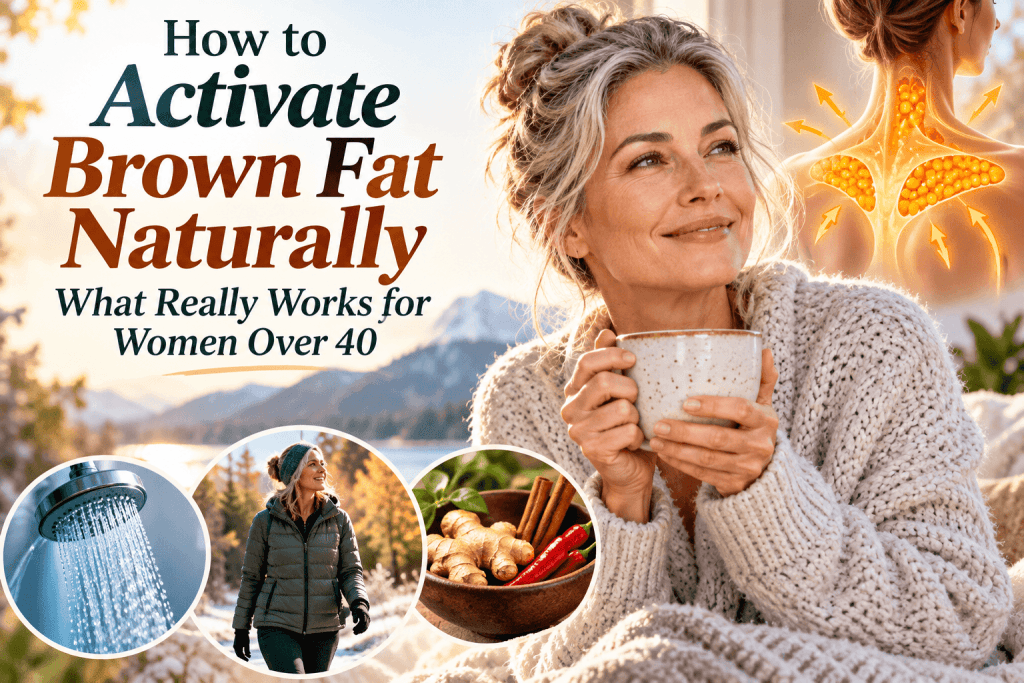
Most of the fat in our bodies is “white fat.” It stores energy for later, and it’s the soft kind we can pinch. Brown fat is a different kind of tissue. Think of it as your body’s built-in heater. When you feel cool, brown fat quietly burns fuel to make heat and keep you warm, without any shivering. Scientists call this non-shivering heat production, but you can simply remember it as “the fat that warms you up” [4].
For a long time, doctors believed only babies had brown fat. Then researchers discovered that adults still have it too, usually in small amounts near the neck and collarbone. That discovery set off a wave of interest, because a tissue that burns fuel for heat could, in theory, help with energy balance and blood sugar [1][4].
There’s also a third kind called “beige fat,” which is white fat that starts to behave a bit like brown fat when it gets the right signals. When people say “browning your fat,” this is usually what they mean.
If you’d like the bigger picture of how your body uses energy, I explain it in Understanding Metabolism: Boosting It Naturally for Better Weight Management.
Why Brown Fat Matters More After 40
Here’s the part that feels personal for women. Research suggests that women tend to have more active brown fat than men during the younger years. But that difference seems to fade after menopause [7]. Brown fat activity also gradually declines as we age [7].
A 2024 study took a close look at this. Researchers compared women before and after menopause, using scans while the women were slightly cold. At normal room temperature, the two groups looked similar. But when the women were cooled down, the brown fat of the younger women worked harder than that of the postmenopausal women [5]. In a smaller part of the study, when the younger women’s estrogen was lowered for a period, their brown fat response dropped to a level close to that of postmenopausal women [5]. The researchers concluded that losing ovarian function seems to lower brown fat activity, independent of age itself [6].
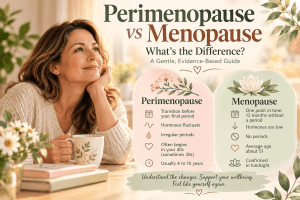
What does this mean in real life? It doesn’t mean something is wrong with you. It may be one of the quiet reasons many women feel they burn energy differently, feel colder, or notice weight settling around the middle during the menopause years. If you’re not sure which stage you’re in, my guide on Perimenopause vs Menopause: The Real Differences explains it simply. It also means that gentle ways of nudging your body’s “heating system” are worth exploring.
The Honest Truth: What Brown Fat Can and Can’t Do
Before we get to the tips, a little reality check, because I’d rather you hear it from me than feel let down later.
- The science is promising but still young. One review noted that, because the studies are small, the evidence on how cold affects brown fat and energy use in people is limited and inconsistent [2]. Another analysis of cold exposure could include only seven studies with 85 people in total [3].
- Brown fat is a small player. Even if you activate it perfectly, its contribution to your daily energy use is modest. It can support your health, but it is not a substitute for food, movement, sleep, and rest.
- Cold seems to be the strongest trigger. Mild cold is the best-studied way to wake brown fat up. In one meta-analysis, short cold exposure raised energy use and brown fat activity in adults [2]. Another review noted that cold exposure increased insulin sensitivity and reduced body fat in some studies [1].
- Everything else has weaker evidence. Exercise, certain foods, and spices are interesting, but we have less proof for them in humans. I’ll tell you exactly where the evidence is thin as we go.
So think of brown fat as one gentle piece of a bigger puzzle, not the whole picture. For the long view, my post on Effective Strategies for Long-Term Weight Management Success shows how all the pieces fit together.
6 Natural Ways to Support Brown Fat After 40
1. Let Yourself Feel a Little Cool (Gently!)
Brown fat wakes up when your body feels mildly cool. This doesn’t mean freezing. Research on “mild cold exposure” shows that brown fat responds when we’re cool enough to need extra warmth, but not so cold that we shiver [4]. Here are comfortable ways to try this:
- End your bath with a cooler rinse. After your usual warm shower, turn the tap to a comfortably cool setting for 30 seconds, working up to a minute or two over several weeks. It should feel fresh, not shocking.
- Dress a little lighter at home. Instead of reaching for a sweater the moment you feel a chill, give your body a few minutes to warm itself first.
- Nudge your room temperature. If you live in a warm place and use a fan or air conditioning, setting it slightly cooler for part of the day and sleeping in a comfortably cool room may help. Aim for “pleasantly cool,” never uncomfortable.
- Take a cooler outdoor walk. Early mornings and evenings are lovely for this.
Please skip aggressive options like ice baths and long cold plunges. The research uses mild, controlled cold. Extreme cold isn’t needed and may not be safe for everyone (see the safety section below).
2. Move Your Body, Especially with Strength and Walking
You’ve probably heard that exercise releases a hormone called irisin that “turns white fat brown.” It’s a lovely idea, and it does appear in lab studies. In people, though, the picture is murkier. One review of exercise studies in people with overweight or obesity found that only six of fourteen studies showed a rise in irisin after exercise, and the response varied widely from person to person [11]. Other reviews say it’s still unknown whether exercise truly turns white fat brown in humans, and that the effect on classic brown fat is debated [12][13].
I still want you to move, and here’s why: strength training and walking protect your muscles and bones through the menopause years, lift your mood, and help you sleep. Interestingly, researchers have found that cold exposure also raised irisin and another helpful signal in people, and they suggest that exercise-driven irisin may have evolved from the muscle contractions of shivering [14]. So movement and warmth-making may be cousins, even if we can’t yet prove that a workout builds brown fat.
A friendly weekly rhythm: two or three short strength sessions (bands, light dumbbells, or your own body weight), a few brisk walks, and some stretching. If you love a low-impact option, read why Reformer Pilates is one of the kindest investments in your long-term health. And if you’d like a gentle routine to follow, my free wellness journals have simple habit pages you can print and tick off.
3. Welcome Warm Spices into Your Kitchen
Chilies and some spices get a lot of attention. The active compounds in chili peppers, called capsaicin, and their milder cousins, capsinoids, have been studied for how they raise heat production in the body. A review of food ingredients noted that capsaicin, green tea, curcumin, resveratrol, menthol, and fish oils have all drawn interest as possible helpers for brown fat, though much of the work comes from lab and animal studies [8]. In people, one placebo-controlled trial of capsinoids reported a rise in energy expenditure and fat burning [8]. A newer randomized trial tested capsinoids in healthy middle-aged adults, looking at brown fat density and resting energy use [9].
So what does this mean for your plate? It means a little warmth from food is a pleasant, low-risk bonus: a pinch of black pepper, fresh ginger, a sprinkle of chili flakes, turmeric in your dal, or a spicy-warm rasam on a cool evening. I’d think of these as flavor-first habits, not fat-burning tricks. And one friendly caution: some women find that spicy food makes hot flashes worse. If that’s you, keep the heat mild, and you may enjoy my post on hot flashes and what your body is really telling you.
4. Sip Green Tea (in Moderation)
Green tea contains plant compounds called catechins, along with a little caffeine. In one small trial, people with low brown fat activity drank a green tea beverage or a placebo twice daily for five weeks, and the researchers reported that the catechin and caffeine combination boosted brown fat’s response to cold [10]. It’s an interesting early finding, but it’s one small study, so I wouldn’t promise miracles.
If you enjoy green tea, one or two cups earlier in the day is a lovely habit. Make it a ritual with my tea rituals for self-care. Because of the caffeine, I’d skip it in the late afternoon and evening, especially if your sleep has been fragile. Which brings me to the next point.
5. Protect Your Sleep and Calm Your Stress
I’m going to be honest: I couldn’t find strong human evidence that sleep or stress management directly boosts brown fat. But I’m including them because they’re the foundation of everything else. When you’re exhausted, you crave more food, move less, and feel colder and more tired. When sleep is good, your body is better able to respond to everything else on this list. I explain the link in The Role of Sleep in Weight Control, and if you wake in the small hours, read why you’re waking up at 3 a.m. in midlife.
If sleep is your struggle, my free ebook, The 7-Night Better Sleep Reset for Women in Midlife, gives you one small, kind habit per night, including how to make your bedroom comfortably cool. A cool sleeping room is a double win: it helps you rest, and mild cool is exactly what brown fat likes.
6. Be Patient and Consistent
Brown fat responds to repeated, gentle signals over weeks, not to one dramatic day. It’s far better to enjoy a cooler rinse and a morning walk most days than to try an extreme challenge once and give up. Small, steady, kind habits are what actually change how your body feels over time.
What I’d Skip
- Ice baths and extreme cold challenges. The studies use mild cold, and extremes can be risky.
- “Brown fat activator” pills and powders. Evidence for these products is thin, and many make big promises. Spend your money on good food, comfortable shoes, and good sleep instead.
- Crash diets. Eating too little can drain your energy, your muscle, and your mood. That’s the opposite of what your body needs in midlife.
- Comparing yourself. Your body is going through a real transition. Be as kind to yourself as you would be to a friend.
A Gentle 4-Week Plan to Try
Here’s a simple plan you can adapt. You don’t have to do everything. Pick what feels comfortable.
Week 1: Start small
- Finish one shower a day with 20 to 30 seconds of comfortably cool water.
- Take a 20-minute walk three times this week.
- Add one warming food, like fresh ginger tea or a pinch of pepper in your meals.
Week 2: Build a rhythm
- Extend the cool rinse to about a minute if you feel fine.
- Add two short strength sessions of 10 to 15 minutes.
- Swap your afternoon coffee for a cup of green tea earlier in the day, if you enjoy it.
Week 3: Cool the house, calm the night
- Keep your bedroom comfortably cool, with breathable bedding.
- Try a gentle wind-down routine before bed.
- Keep walking, and enjoy an early-morning walk in the cooler air.
Week 4: Keep what works
- Notice how you feel: energy, warmth, sleep, and mood.
- Keep the habits you enjoy and drop the ones you don’t.
- Write a few lines in a journal about what you noticed.
Who Should Be Careful
Gentle cool-downs suit most healthy people, but please talk to your doctor first if you have heart problems, high blood pressure, poor circulation, Raynaud’s (cold, painful fingers), diabetes, or any ongoing health condition, or if you are pregnant or feeling unwell. Stop if you feel dizzy, chest tightness, numbness, or anything that doesn’t feel right. Your comfort and safety come first. Mild means mild.
Frequently Asked Questions
What is brown fat, and why is it called “good fat”?
Brown fat is a special kind of body fat that burns fuel to make heat, helping to keep you warm. People call it “good fat” because it uses energy instead of just storing it [1][4]. It’s found in small amounts near the neck and collarbone in adults.
Can you increase brown fat after 40?
Research suggests brown fat activity declines with age, and in women it appears to drop after menopause [5][7]. Studies show that brown fat can still respond to mild cold in adults [2]. So while it may be less active, there’s good reason to believe gentle habits can still support it. How much it helps will vary from person to person.
Does menopause reduce brown fat?
A 2024 study found that cold-induced brown fat activity was lower in postmenopausal women than in younger women, and it concluded that loss of ovarian function is associated with this drop [5][6]. This is one area where research is still growing.
How do I activate brown fat naturally?
Mild cold is the best-studied trigger. A cooler rinse at the end of a shower, a comfortably cool bedroom, and cooler outdoor walks are gentle options. Regular movement, warming spices, and green tea are other habits that researchers are exploring, though the evidence for them is weaker [2][8][10].
Do cold showers burn belly fat?
Not by themselves. Cold exposure can raise energy use and brown fat activity a little, but it’s not a quick fix for belly fat [2]. Think of it as a small supportive habit, alongside good food, movement, and sleep.
How long does it take to see results?
Most studies look at changes over days to weeks, and results vary. You may notice feeling a bit more energetic or comfortable with cooler temperatures within a few weeks. Don’t expect big changes on the scale. Judge progress by how you feel.
Does exercise increase brown fat?
It’s possible but unproven. Exercise raises a signal called irisin in some people, but the response is inconsistent, and researchers say it’s still unknown whether exercise truly browns fat in humans [11][12][13]. Exercise is still excellent for your muscles, bones, mood, and sleep.
Which foods activate brown fat?
Chili peppers, green tea, and a few other plant foods have been studied, mostly in lab settings or small trials [8][10]. No single food is a magic activator. Enjoy them as part of a varied, nourishing diet.
Do brown fat supplements work?
I’d be cautious. Evidence for most products sold as “brown fat boosters” is limited, and the best-studied triggers remain mild cold and lifestyle habits. Please talk to your doctor before taking any new supplement.
Is it safe to try cold exposure at home?
Gentle, comfortable cooling is safe for most healthy people. Avoid extreme cold, and check with your doctor first if you have heart, blood pressure, or circulation concerns.
Will activating brown fat help me lose weight?
Possibly a little, but it’s not a weight-loss solution. Brown fat’s contribution to energy use is modest, so I’d focus on overall habits and how you feel.
Where can I find more gentle wellness tips for midlife?
Join our newsletter on the Holistic Wellness Hub homepage, download our free ebook, and browse the free wellness journals.
Keep Reading
- Longevity for Women Over 40: How to Increase Your Healthspan Naturally
- Perimenopause in Your 40s: Early Signs Most Women Miss
- Nervous System Regulation for Women 40+: Menopause Relief
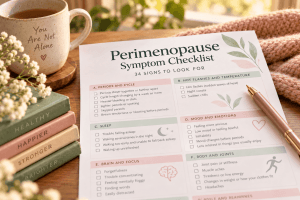
- Perimenopause Symptoms Checklist: 34 Signs to Track (Free Printable)
A Final Thought
Your body isn’t broken. It’s changing, and it deserves patience, curiosity, and care. Brown fat is a fascinating part of that story, and a little gentle coolness, a brisk walk, a warming cup of tea, and a good night’s sleep are all lovely ways to work with your body instead of against it.
Start small. Notice how you feel. Keep what helps. And be proud of yourself for showing up.
With warmth,
Swarnambal John
This article is for general information and inspiration only. It is not medical advice and does not replace guidance from a qualified healthcare professional. Please talk to your doctor before making changes to your routine, especially if you have a health condition.
Bibliography and Further Reading
Accessed October 2026. Where a link points to a summary rather than the original study, I’ve said so.
- Thuzar M, Ho KKY. Mechanisms in endocrinology: brown adipose tissue in humans: regulation and metabolic significance. European Journal of Endocrinology. 2017;175(1):R11–R25. nutrition-evidence.com (abstract summary)
- Huo C, Song Z, Yin J, et al. Effect of acute cold exposure on energy metabolism and activity of brown adipose tissue in humans: a systematic review and meta-analysis. Frontiers in Physiology. 2022. pmc.ncbi.nlm.nih.gov/articles/PMC9273773
- Tabei S, Chamorro R, Meyhöfer SM, Wilms B. Metabolic effects of brown adipose tissue activity due to cold exposure in humans: a systematic review and meta-analysis of RCTs and non-RCTs. Biomedicines. 2024;12(3):537. ncbi.nlm.nih.gov/pmc/articles/PMC10968636
- Ocobock C, Niclou A, Stenbäck V, McElreavy D. Burning fast and slow: a review of the differential metabolic routes of brown adipose tissue activity during cold exposure and their implications for populational variation. 2025. oulurepo.oulu.fi/handle/10024/60243
- Brown adipose tissue metabolism in women is dependent on ovarian status. American Journal of Physiology: Endocrinology and Metabolism. 2024. doi.org/10.1152/ajpendo.00077.2024
- American Physiological Society. Good fat metabolism changes tied to estrogen loss, not necessarily to aging. 21 May 2024. physiology.org (news summary of reference 5)
- Sex differences in brown adipose tissue function: sex hormones, glucocorticoids, and their crosstalk. Frontiers in Endocrinology. 2021. pmc.ncbi.nlm.nih.gov/articles/PMC8078866
- Food ingredients activating brown adipose tissue and browning of white fat (mini review of capsaicin, green tea, curcumin, resveratrol, menthol and omega-3). Frontiers in Physiology. 2018. pmc.ncbi.nlm.nih.gov/articles/PMC6336830
- Effects of capsaicinoid intake on brown adipose tissue in healthy, middle-aged adults: a randomized, double-blind, placebo-controlled study. Nutrients. 2020;12:2676. mdpi.com (PDF)
- Tea catechin and caffeine activate brown adipose tissue and increase cold-induced thermogenic capacity in humans. Summary: Natural Health Research. naturalhealthresearch.org (summary of a small trial)
- Bernal-Rivas C, Llamunao-Tropa A, Reyes-Barria A, Ehrenfeld P. Effects of exercise on irisin in subjects with overweight or obesity: a systematic review of clinical studies. Nutrición Hospitalaria. investigadores.anid.cl
- Role of exercise in the activation of brown adipose tissue. Annals of Nutrition and Metabolism. 2015;67(1):21–32. pubmed.ncbi.nlm.nih.gov/26227180
- Endocrine mechanisms connecting exercise to brown adipose tissue (review). fisiologiadelejercicio.com (PDF)
- Irisin and FGF21 are cold-induced endocrine activators of brown fat function in humans. pmc.ncbi.nlm.nih.gov/articles/PMC7647184