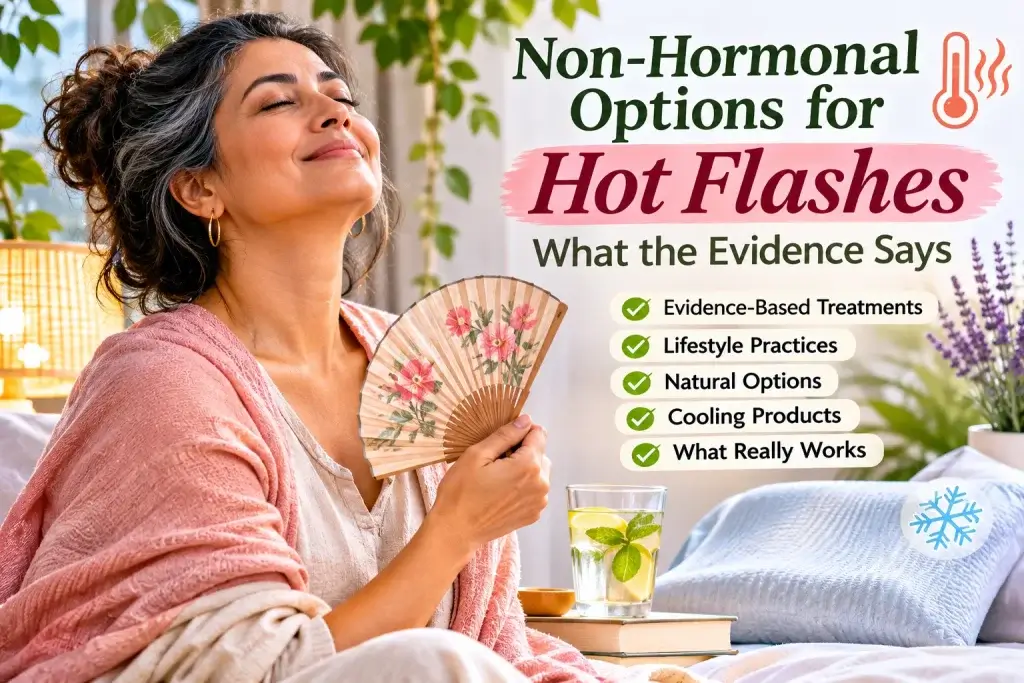

There is a particular kind of surprise that comes with a hot flash. You may be sitting quietly, reading, working, or finally drifting off to sleep when a sudden wave of heat rises through your chest, neck and face. A few moments later, you may be reaching for a fan, changing your nightclothes or wondering why your body seems to have switched on its own little heating system.
If this sounds familiar, you are not imagining it—and you are certainly not alone. Hot flashes, also called vasomotor symptoms (VMS), are among the most recognised symptoms of perimenopause and menopause. They can range from mildly irritating to genuinely disruptive, especially when night sweats repeatedly interrupt sleep.
Many women would prefer not to use hormone therapy. Some have medical reasons to avoid it; others simply want to understand non-hormonal choices first. The good news is that several non-hormonal treatments have been studied properly. The less encouraging news is that many remedies promoted online have not demonstrated reliable benefits.
In this guide, we will look at what the research actually supports, what may help you feel more comfortable, and what deserves a little healthy scepticism. The aim is not to find a miracle cure. It is to help you make an informed, individual plan with your healthcare professional.
A note before we begin: This is general education, not medical advice. Your doctor can help you choose an approach that is right for your health and circumstances.
First, why do hot flashes happen?
During the menopause transition, changing and eventually lower oestrogen levels affect the brain’s temperature-regulation system. The hypothalamus—the body’s internal thermostat—can become more sensitive to small changes in core temperature. A relatively minor rise in temperature may trigger the body to cool itself: blood vessels near the skin widen, sweating increases and you experience a sudden flush of heat. Some women also notice palpitations, chills or a feeling of anxiety during an episode.
Hot flashes can happen during the day or at night. Night-time episodes are often called night sweats when they cause noticeable sweating. Their frequency and intensity vary considerably. Some women experience occasional episodes; others have several each day and wake repeatedly at night.
Not every episode of flushing is caused by menopause. Fever, thyroid conditions, infections, medication effects, low blood glucose and other medical issues can also cause sweating or flushing. New, severe or unusual symptoms deserve medical assessment rather than an automatic menopause label.
What does “non-hormonal treatment” mean?
Non-hormonal treatment means managing hot flashes without using menopausal hormone therapy (MHT, often called HRT). It includes structured psychological approaches, prescription medicines that act on different pathways, and supportive lifestyle measures. These options are not all equally effective, and “natural” does not automatically mean safe or evidence-based.
Hormone therapy remains the most effective treatment for bothersome vasomotor symptoms for many suitable women. Whether it is appropriate depends on personal health history, age, time since menopause, risks, preferences and the type of symptoms. This article focuses on alternatives, not on suggesting that every woman should avoid hormones. A clinician can help compare the benefits and risks of all available choices.
1. Weight management: a possible benefit, not a quick fix
Evidence reviewed by The Menopause Society suggests that weight loss may help reduce vasomotor symptoms for some women, although the strength of evidence is lower than for CBT, clinical hypnosis and several prescription treatments. This is not a reason to blame yourself for hot flashes or to begin a restrictive diet.
If weight management is a goal, focus on sustainable habits: regular meals, adequate protein and fibre, enjoyable movement, strength-building activity and sleep support. Midlife bodies deserve care, not punishment. A dietitian or clinician can help create a plan that considers medical history, nutritional needs and your relationship with food.
2. Cooling strategies: helpful for comfort, but not a proven treatment
Here is where we need to separate two ideas: making a hot flash more comfortable and reducing the number of hot flashes. A fan, cool bedroom, breathable sleepwear, layered clothing, a cool drink or a cooling pillow may make an episode easier to manage. These can be sensible comfort measures, especially at night.
However, the 2023 Menopause Society evidence review did not find sufficient evidence to recommend cooling techniques as a treatment that reliably reduces vasomotor symptom frequency or severity. In other words, a cooling product may help you feel more comfortable, but it should not be advertised as a clinically proven cure for hot flashes.
If you are shopping for comfort, consider practical details: washable covers, breathable materials, a comfortable rather than excessively cold surface, ease of cleaning and whether the product suits your sleep position. A cooling pillow or lightweight bedding can be part of a restful bedroom setup. It is an accessory for comfort—not a substitute for evidence-based care.
Explore related reading: Menopause Gift Guide: 15 Thoughtful Ideas for Women in Midlife.
3. Movement, food, mindfulness and personal triggers
Regular movement, yoga, mindfulness and relaxation can support cardiovascular health, mood, strength, balance and general wellbeing. Many women find them valuable parts of a midlife wellness routine. But the evidence does not show that they consistently reduce hot flashes themselves.
The Menopause Society’s 2023 review did not recommend exercise, yoga, mindfulness-based interventions, relaxation or paced breathing as specific treatments for vasomotor symptoms because evidence of direct benefit was insufficient or inconsistent. That does not mean these activities are useless. It means we should be honest about what they can and cannot do.
Some women notice that alcohol, spicy foods, hot drinks, warm rooms or stress seem to trigger episodes. Keeping a symptom diary can help you identify personal patterns. There is no need to ban every possible trigger if you do not see a connection. Personal observation is more useful than a long list of rules that makes life smaller.
For a gentle, whole-person approach, you may also enjoy Nervous System Reset for Women Using Slow Living Practices and Why You’re Waking Up at 3AM in Midlife. These are supportive wellbeing reads, not substitutes for treatments proven to reduce hot flashes.
4. Herbal remedies and supplements: pause before you purchase
Black cohosh, evening primrose oil, red clover, soy extracts, maca, wild yam creams and many other products are marketed for menopause. The challenge is that popularity and testimonials do not establish effectiveness. The Menopause Society’s 2023 review did not recommend supplements and herbal remedies for vasomotor symptoms because the evidence was inadequate or inconsistent.
Products can also vary in ingredients, dose, purity and quality. “Natural” does not mean risk-free. Supplements may interact with prescription medicines or be unsuitable for people with liver disease, hormone-sensitive conditions or other health concerns. In India, the Indian Menopause Society’s 2026 guidance also highlights concerns about variable regulation of herbal and nutraceutical products.
Soy foods such as tofu, tempeh and soy milk can be part of a balanced diet if you enjoy them and tolerate them. That is different from claiming that soy foods or concentrated soy supplements are a proven treatment for hot flashes. Food can support overall nutrition without being a medicine.
Before starting a supplement, take the actual product label to your doctor or pharmacist. Be particularly cautious of products promising to “balance hormones”, “reverse menopause” or eliminate symptoms in a few days.
Medical treatments to discuss with your doctor
If lifestyle and comfort measures are not enough—or symptoms are affecting your sleep and quality of life—there are evidence-based options beyond hormone therapy. Ask your doctor whether menopause-specific cognitive behavioural therapy (CBT), clinical hypnosis or a prescription treatment may suit you. Depending on your health history and local availability, options may include certain SSRIs or SNRIs, gabapentin, oxybutynin or fezolinetant. These treatments are not suitable for everyone, and your clinician can explain the benefits, precautions and monitoring relevant to you. Do not start, stop or share prescription medicines on your own.
5. How to build a practical plan that fits your life
There is no single plan that suits every woman. A useful starting point is to understand how often symptoms happen, how severe they are and what they interrupt. For two weeks, record the time of each hot flash, possible triggers, sleep disruption, menstrual changes and any medicines or supplements you take.
Our Perimenopause Symptoms Checklist and Perimenopause Symptom Tracker guide can help you organise what you are experiencing before an appointment.
Then consider these steps:
- Describe the impact. Tell your clinician whether symptoms affect sleep, work, concentration, exercise or mood.
- Review your health history. Discuss current medicines, medical conditions, family history and whether hormone therapy is an option for you.
- Ask about evidence-based choices. Discuss menopause-specific CBT, clinical hypnosis and appropriate prescription options.
- Use comfort measures realistically. Make your bedroom comfortable and choose breathable bedding, but do not expect a cooling product to treat the underlying mechanism.
- Review the plan. Track benefits and side effects, and arrange follow-up rather than continuing a treatment that is not helping.
When should you speak to a healthcare professional?
Speak with a healthcare professional if hot flashes are severe, newly appearing, worsening or interfering with daily life. Arrange an assessment for night sweats with fever, unexplained weight loss, significant palpitations or other unusual symptoms. Seek urgent medical care now for chest pain, severe breathlessness or fainting—do not assume these are menopause symptoms.
It is also worth discussing symptoms if you are under 40, have had menopause induced by surgery or cancer treatment, or are unsure whether your symptoms are related to menopause. A clinician can consider other causes and help you choose a safe approach.
The bottom line: evidence first, comfort always
Non-hormonal menopause care has come a long way. CBT and clinical hypnosis have supportive evidence, and several prescription medicines—including SSRIs/SNRIs, gabapentin, oxybutynin and fezolinetant—may help appropriate patients. Weight loss may benefit some women, while many popular supplements and lifestyle techniques have not been shown to reliably reduce hot flashes.
That does not mean you must abandon the small rituals that make you feel better. A cool pillow, a fan, a quiet evening, gentle movement or a calming bedtime routine can all have a place in a kinder approach to midlife. We simply need to be clear about the difference between comfort and treatment.
And please remember this: you do not have to endure disruptive symptoms in silence. You deserve a conversation about your choices, clear information and care that respects your preferences. Menopause is a life transition—not a test of how much discomfort you can tolerate.
Frequently asked questions
1. What is the most effective non-hormonal treatment for hot flashes?
There is no single best option for everyone. Evidence-supported choices include menopause-specific CBT, clinical hypnosis and certain prescription medicines such as SSRIs/SNRIs, gabapentin, oxybutynin and fezolinetant. The right option depends on your health history, symptom pattern, local approvals and preferences.
2. Can hot flashes be treated without hormones?
Yes. Several non-hormonal psychological and prescription treatments can reduce symptoms or their impact. A healthcare professional can help you compare them with hormone therapy, which remains the most effective treatment for many women who are suitable candidates.
3. Do cooling pillows or cooling blankets stop hot flashes?
They may improve comfort during sleep, but current evidence does not establish cooling techniques as a reliable way to reduce the frequency or severity of hot flashes. Think of them as comfort aids rather than medical treatment.
4. Does black cohosh help menopause hot flashes?
Evidence is inconsistent, and The Menopause Society does not recommend herbal supplements, including commonly marketed remedies, as proven treatment for vasomotor symptoms. Supplements may also have quality, safety and interaction concerns. Ask a clinician before using one.
5. Can exercise and yoga reduce hot flashes?
Exercise and yoga support general health, strength, mood and wellbeing. However, research has not consistently shown that they reduce hot flashes themselves. Keep doing activities you enjoy, but do not rely on them as the only treatment for severe symptoms.
6. Is CBT useful if I do not have anxiety or depression?
Yes. Menopause-specific CBT is designed to help with the impact of menopause symptoms, including hot flashes and sleep difficulties. You do not need to have a mental health diagnosis to ask about it.
7. Is fezolinetant a hormone treatment?
No. Fezolinetant is a non-hormonal NK3 receptor antagonist that acts on a brain pathway involved in temperature regulation. It has important safety and liver-monitoring requirements. Availability and prescribing rules differ by country, so discuss it with a qualified clinician.
8. When should I seek help for night sweats?
Speak with a clinician if night sweats repeatedly disturb sleep, are new or severe, or come with other symptoms such as fever or unexplained weight loss. Not all night sweats are caused by menopause.
9. Do I have to stop coffee, spicy food or alcohol?
No universal trigger list applies to everyone. If you suspect a connection, record what you consume and when symptoms occur. Make changes based on your own pattern rather than unnecessarily restricting your diet.
10. How long do menopause hot flashes last?
Duration varies widely. Some women experience them for a relatively short period, while others have symptoms for years. If they remain disruptive, you do not need to simply wait them out—discuss management options with your clinician.
References and further reading
- The Menopause Society. (2023). The 2023 nonhormone therapy position statement of The North American Menopause Society. Menopause, 30(6), 573–590. PubMed abstract. https://doi.org/10.1097/GME.0000000000002200
- National Institute for Health and Care Excellence (NICE). Menopause: identification and management (NG23), recommendations. Updated guidance includes menopause-specific CBT for vasomotor symptoms and sleep problems. Read NICE recommendations.
- National Institute for Health and Care Excellence (NICE). (2026). Fezolinetant for treating moderate to severe vasomotor symptoms associated with menopause (TA1143). Read the guidance.
- Indian Menopause Society. (2026). Clinical Practice Guidelines for Menopause: An Executive Summary and Recommendations. Read the guideline on PubMed Central.
- ACOG Committee on Clinical Practice Guidelines–Gynecology. (2026). Clinical Practice Guideline: Management of Menopause-Related Vasomotor, Sleep, and Mood Symptoms. Obstetrics & Gynecology. PubMed record.
Medical Disclaimer: This article is intended for general educational and informational purposes only. It is not a substitute for professional medical advice, diagnosis or treatment. Every woman’s health journey is different. Please consult a qualified healthcare professional before making decisions about treatments, medications or supplements. Never disregard professional medical advice because of something you have read in this article.