
There is a quiet shift that happens in a woman’s body sometime after 40.
It doesn’t arrive with a clear announcement.
It doesn’t follow a predictable timeline.
But you begin to feel it…
You feel more sensitive.
More tired.
More easily overwhelmed.
Things that once felt manageable now feel heavy.
You might lie awake at night, your mind racing.
You might feel anxious without a clear reason.
You might snap at loved ones and then sit in guilt afterward.
And somewhere deep inside, a question begins to form:
✨ “Why do I feel like this… when nothing is technically wrong?”
You are told it is hormones.
You are told to exercise more, eat better, push through.
But what if the missing piece isn’t something you need to add…
What if it’s something your body is quietly asking you to restore?
👉 Your nervous system
THE HIDDEN ROOT OF MENOPAUSE SYMPTOMS
Menopause is often spoken about in terms of estrogen, progesterone, and physical symptoms.
But there is another layer—one that shapes how intensely you experience everything:
✨ Your nervous system
Your nervous system is your body’s control center. It constantly scans your environment and asks:
👉 “Am I safe?”
If the answer is no, your body shifts into survival mode.
And here’s the truth many women are never told:
💔 By the time you reach your 40s, your nervous system has often been under stress for decades.
-
Balancing work and family
-
Emotional labor
-
Lack of rest
-
Constant mental load
Over time, your system becomes overloaded.
Then menopause arrives…
And suddenly, your body has less hormonal support to buffer stress
UNDERSTANDING YOUR NERVOUS SYSTEM (SIMPLIFIED)
There are two main states that matter here:
⚡ 1. Sympathetic Nervous System (Fight or Flight)
This is your stress response.
-
You feel anxious
-
Your heart races
-
Your thoughts speed up
-
Your body prepares for action
This state is helpful in danger…
But harmful when it becomes your default.
🌿 2. Parasympathetic Nervous System (Rest & Heal)
This is your calm state.
-
Your body relaxes
-
Digestion improves
-
Hormones regulate
-
You feel safe and grounded
This is where healing happens
WHAT CHANGES AFTER 40?
As estrogen begins to fluctuate and decline:
-
Your stress tolerance decreases
-
Your nervous system becomes more sensitive
-
Cortisol (stress hormone) has a stronger impact
This is why you may experience:
-
Anxiety you never had before
-
Poor sleep
-
Increased irritability
-
Emotional overwhelm
✨ It’s not that you are “losing control.”
✨ Your body is becoming more honest
THE CORTISOL–MENOPAUSE CONNECTION
Cortisol is your body’s main stress hormone.
When your nervous system is constantly activated:
-
Cortisol stays elevated
-
Inflammation increases
-
Hormonal balance becomes harder to maintain
Now add menopause to this…
With less estrogen to regulate stress, cortisol becomes louder.
This can lead to:
-
Hot flashes triggered by stress
-
Anxiety spikes
-
Midnight wake-ups
-
That “wired but exhausted” feeling
🌸 SIGNS YOUR NERVOUS SYSTEM IS OUT OF BALANCE
Many women think something is “wrong” with them.
But these are actually signals:
-
You feel tired but can’t relax
-
You feel anxious without a clear cause
-
You wake up between 2 and 4 AM
-
You feel overwhelmed by small tasks
-
You struggle to focus (brain fog)
-
You feel emotionally sensitive or reactive
Your body is not failing you
It is communicating with you
WHY MOST ADVICE DOESN’T WORK
You may have tried:
-
Strict diets
-
Intense workouts
-
Supplements
-
Productivity routines
And yet… You still don’t feel better.
Because none of these addresses the root issue:
👉 Your body does not feel safe
When your nervous system is dysregulated:
-
Your digestion slows
-
Your hormones struggle
-
Your sleep suffers
You cannot heal in a state of stress
THE SHIFT: FROM CONTROL TO CALM
What your body needs now is not more discipline.
It needs regulation.
Regulation means:
-
Teaching your body that it is safe
-
Moving out of constant stress mode
-
Creating conditions where healing can happen naturally
This is not about perfection.
It is about gentle consistency
HOW TO REGULATE YOUR NERVOUS SYSTEM
🌬️ 1. BREATHING: YOUR BUILT-IN RESET BUTTON
Your breath is directly connected to your nervous system.
Try this simple practice:
-
Inhale slowly for 4 seconds
-
Exhale gently for 6 seconds
Repeat for 2–5 minutes.
✨ Longer exhales signal safety to your body
☀️ 2. CREATE A SOFT MORNING RITUAL
How you start your day matters.
Instead of:
-
Checking your phone
-
Jumping into tasks
Try:
-
Sitting quietly
-
Drinking something warm
-
Letting your body wake slowly
Even 5 minutes can shift your entire nervous system.
🌿 3. CHOOSE GENTLE MOVEMENT
High-intensity workouts can sometimes increase stress.
Instead, focus on:
-
Walking
-
Stretching
-
Yoga
-
Slow, mindful movement
✨ Movement should feel supportive, not punishing
🕯️ 4. USE YOUR SENSES TO CREATE CALM
Your environment influences your nervous system.
Try adding:
-
Soft lighting
-
Warm drinks
-
Calm music
-
Pleasant scents
These small sensory cues tell your body:
👉 “You are safe.”
📱 5. REDUCE OVERSTIMULATION
Constant input = constant stress
Create boundaries:
-
No-phone mornings (even 10 minutes)
-
Turn off unnecessary notifications
-
Take quiet breaks during the day
🌙 6. BUILD A NIGHTTIME WIND-DOWN RITUAL
Your body needs help transitioning into rest.
Try:
-
Dim lights in the evening
-
Avoid screens 30–60 minutes before bed
-
Drink a calming herbal tea
-
Sit in silence or journal
✨ Sleep begins long before you lie down
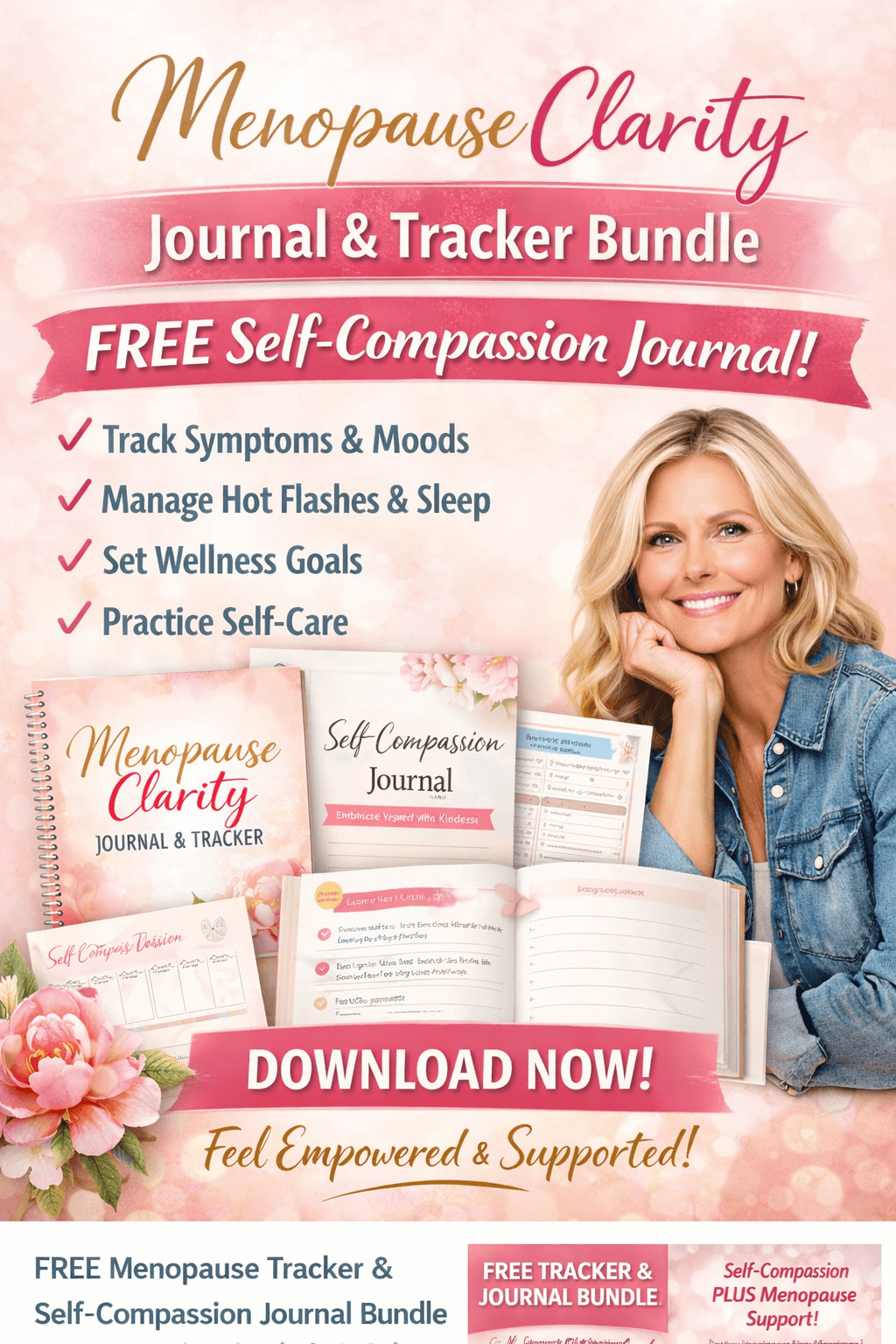
“You don’t have to navigate menopause alone. Your body is changing — but with the right support, this season can become one of clarity, calm, and confidence.
The Menopause Journal & Symptom Tracker Bundle is your gentle daily companion — helping you understand your body, track patterns, and nurture emotional balance.
✨ Includes:
- Menopause Clarity Journal (guided prompts for reflection and self‑compassion)
- Symptom & Wellness Tracker (identify triggers and support your body wisely)
- FREE Self‑Compassion Journal (a bonus for emotional grounding and kindness)
💗 Perfect for women ready to move from confusion to calm — one mindful page at a time. Start your journey today and rediscover your inner steadiness.
👉 Shop the Menopause Journal Bundle on Etsy.”
A SIMPLE DAILY ROUTINE FOR REAL LIFE
Morning (5–10 minutes)
-
Sit quietly
-
Drink something warm
-
Take a few slow breaths
Afternoon (5-minute reset)
-
Step outside or look at the sky
-
Take deep breaths
-
Slow your
Evening (10–20 minutes)
-
Dim lights
-
Reduce stimulation
-
Engage in a calming ritual
✨ This is enough
You don’t need a complicated routine
NATURAL SUPPORTS FOR YOUR NERVOUS SYSTEM
While lifestyle is the foundation, these can help:
-
Magnesium (supports relaxation)
-
Herbal teas (chamomile, lemon balm)
-
Warm baths
-
Journaling
These are gentle supports—not quick fixes.
THE EMOTIONAL LAYER: LETTING GO OF PRESSURE
Many women carry invisible expectations:
-
To stay strong
-
To handle everything
But your body is asking for something different now.
✨ Slowness
✨ Gentleness
✨ Space
This is not a weakness.
This is wisdom.
Visit SproutHealth.co to shop our curated collection of wellness, home, beauty, fitness, and lifestyle essentials. Discover products that bring comfort, ease, and inspiration into your everyday life.
🌿 COMMON QUESTIONS WOMEN ASK
❓ Can nervous system regulation really reduce menopause symptoms?
Yes. Reducing stress supports hormonal balance and improves symptoms.
❓ How long before I feel better?
Some practices (like breathing) offer immediate relief.
Deeper changes happen over weeks of consistency.
❓ Why do I feel more anxious at night?
Your nervous system is tired, and cortisol patterns shift.
❓ Is it normal to feel overwhelmed during menopause?
Yes. Your body is going through a major transition.
❓ Do I need to change everything in my life?
No.
Start small.
Small changes create powerful shifts
A GENTLE REFRAME
Instead of asking:
👉 “How do I fix this?”
Try asking:
✨ “How can I support my body?”
🌿 CONCLUSION: RETURNING TO SAFETY
If you have been feeling overwhelmed, anxious, or unlike yourself…
Please hear this softly:
✨ You are not broken
✨ You are not failing
Your body is asking for something it has not received in a long time:
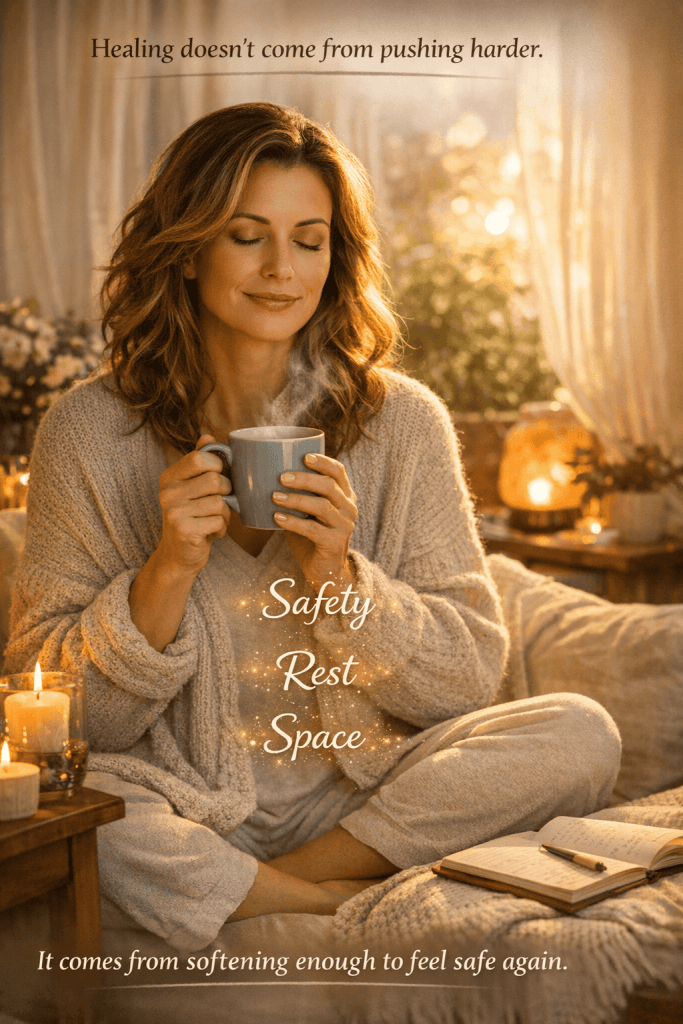
👉 Safety
👉 Rest
👉 Space
And when you begin to offer that…
Everything starts to shift.
FINAL WORD
✨ Healing doesn’t come from pushing harder
✨ It comes from softening enough to feel safe again