



If you’re in your 40s (or even your late 30s) and suddenly feeling like your body has a mind of its own, you’re not alone. One week you’re sleeping beautifully, the next you’re wide awake at 3 a.m. for no reason. One month your period is early, the next it’s late. Some days you feel calm and grounded, and others… well, you’re crying because someone ate your chocolate.
Welcome to perimenopause — the long, winding, often confusing hormonal transition leading up to menopause. It can last anywhere from 4 to 10 years, and for many women, it’s the first time they realize just how profoundly hormones influence everything from mood to metabolism to memory.
But here’s the empowering truth: When you track your symptoms, everything becomes clearer. Patterns emerge. Triggers reveal themselves. And you finally feel like you’re back in the driver’s seat.
This article will show you exactly why tracking matters, what to track, and how to start — in a way that feels simple, compassionate, and doable.
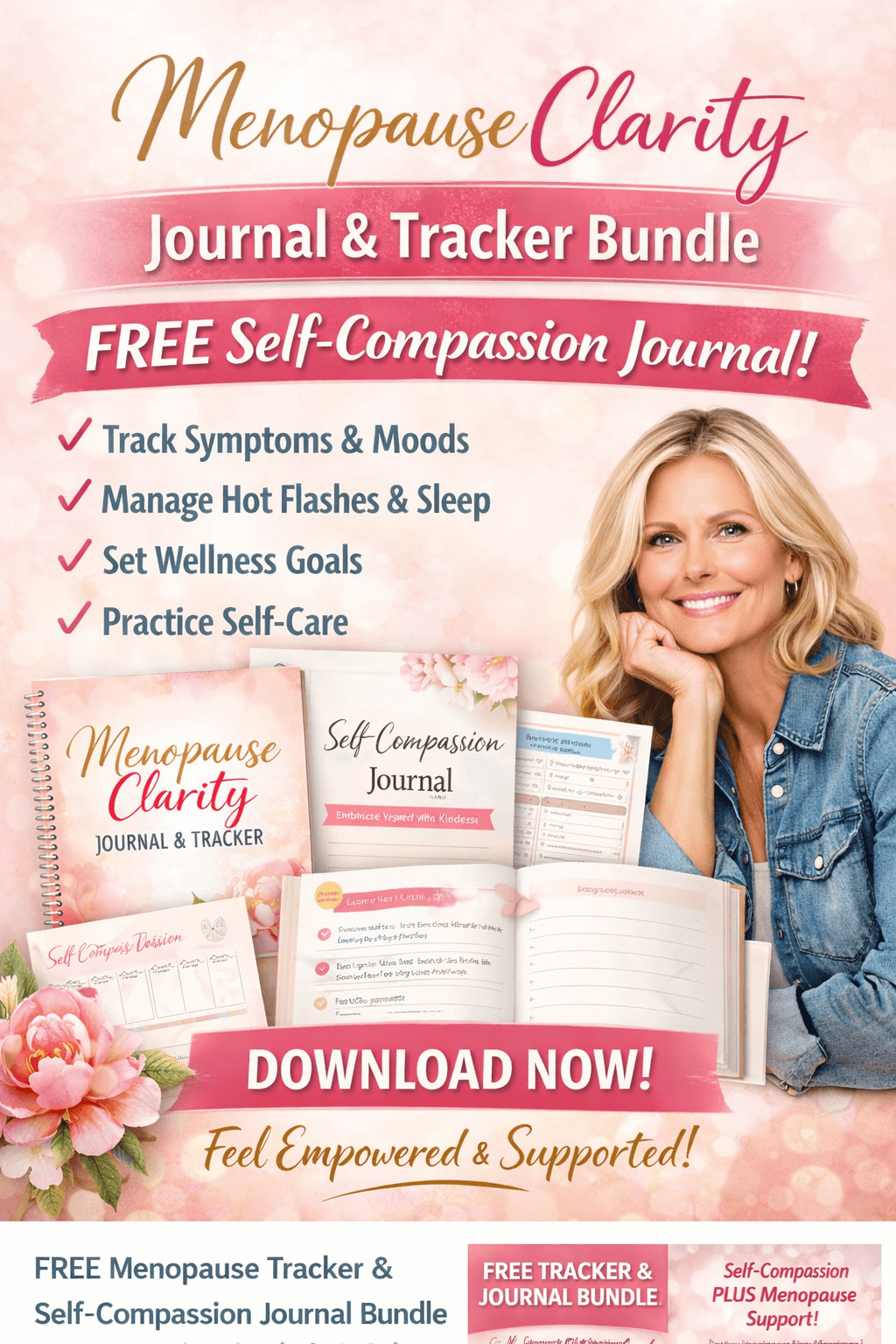
🌸 Special Offer: Menopause Clarity Tracker Bundle — Now on Sale!
If you’re ready to understand your body and track your symptoms with clarity, this beautifully designed printable bundle is your perfect companion.
- 🌿 Perimenopause Symptom Tracker — daily & weekly logs to spot patterns
- 💫 Menopause Journal — guided prompts for emotional clarity
- 🌸 Self-Compassion Journal — affirmations and gratitude space
Together, they help you track, reflect, and thrive through every stage of change.
✨ Mother’s Day Sale: Get the entire bundle for just $1 — limited time!
Why Tracking Perimenopause Symptoms Is a Game-Changer
Perimenopause symptoms can feel random, but they’re not. They follow hormonal rhythms — even if those rhythms are irregular. Tracking helps you:
1. Understand What’s Really Happening in Your Body
When estrogen and progesterone fluctuate, they affect:
- Sleep
- Mood
- Energy
- Digestion
- Temperature regulation
- Cognitive function
- Inflammation
- Menstrual cycles
Tracking helps you see how these systems interact.
2. Identify Patterns You Would Never Notice Otherwise
For example:
- Hot flashes spike after poor sleep
- Anxiety worsens the week before your period
- Joint pain increases after high‑sugar meals
- Night sweats appear during high‑stress weeks
- Brain fog worsens mid‑cycle
These insights are powerful because they help you make targeted changes.
3. Get Better Medical Care
Doctors take you more seriously when you bring data, not just symptoms.
A 60‑day symptom log can help your doctor:
- Confirm perimenopause
- Rule out thyroid issues
- Adjust HRT or supplements
- Identify patterns in cycle irregularity
- Understand mood fluctuations
- Tailor treatment to your body
4. Reduce Anxiety and Feel More in Control
When symptoms feel unpredictable, it’s easy to feel overwhelmed. Tracking gives you clarity — and clarity brings calm.
The Most Common Perimenopause Symptoms to Track
Perimenopause affects nearly every system in the body. Here are the symptoms worth tracking:
Cycle & Hormonal Symptoms
- Irregular periods
- Shorter or longer cycles
- Heavier or lighter bleeding
- Spotting between periods
- PMS changes
Temperature & Sleep
- Hot flashes
- Night sweats
- Insomnia
- Early morning waking
- Restless sleep
Mood & Cognitive Changes
- Anxiety
- Irritability
- Mood swings
- Depression
- Brain fog
- Memory lapses
- Difficulty concentrating
Physical Symptoms
- Fatigue
- Joint pain
- Muscle aches
- Headaches
- Heart palpitations
- Weight gain
- Bloating
- Breast tenderness
- Hair thinning
- Dry skin
Sexual & Reproductive Health
- Low libido
- Vaginal dryness
- Discomfort or pain during intimacy
Digestive & Metabolic Changes
- Constipation
- Diarrhea
- Food sensitivities
- Blood sugar swings
Tracking these helps you see which symptoms cluster together — and what triggers them.
🌿 Explore the SproutHealth Wellness Shop
Visit SproutHealth.co
to shop our curated collection of wellness, home, beauty, fitness, and lifestyle essentials.
Discover thoughtful products designed to bring comfort, ease, and inspiration into your everyday life.
Why Symptoms Feel “Random” — The Hormone Connection
Perimenopause is not a slow, gentle decline in hormones. It’s more like a roller coaster.
Estrogen spikes and crashes
This causes:
- Breast tenderness
- Mood swings
- Anxiety
- Heavy periods
- Migraines
Progesterone gradually declines
This leads to:
- Poor sleep
- Irritability
- PMS
- Irregular cycles
Cortisol rises when sleep is disrupted
This worsens:
- Belly fat
- Anxiety
- Hot flashes
- Blood sugar swings
Tracking helps you see how these hormones influence each other.
How to Start Tracking Your Symptoms (Simple, Doable, Zero Overwhelm)
You don’t need a complicated system. You just need consistency.
Step 1: Choose Your Tracking Method
You can use:
- A notebook
- A printable symptom tracker
- A notes app
- A perimenopause‑specific app
- A spreadsheet
- A daily journal
Choose what feels natural.
Step 2: Track These 5 Core Areas Daily
Just 30 seconds a day:
- Mood
- Sleep quality
- Energy level
- Cycle day
- Top 3 symptoms of the day
Step 3: Add Lifestyle Factors
These influence symptoms more than most women realize:
- Caffeine
- Alcohol
- Stress
- Exercise
- Sugar intake
- Hydration
- Supplements
- HRT
Step 4: Review Weekly Patterns
Ask yourself:
- What improved?
- What worsened?
- What triggered symptoms?
- What helped?
Step 5: Bring Your Data to Your Doctor
A 30‑day log can transform your appointment.
Real Examples of Patterns Women Discover
Case 1: “My anxiety always spikes mid‑cycle.”
This often correlates with estrogen surges.
Case 2: “My hot flashes are worse after wine.”
Alcohol is a known vasodilator.
Case 3: “My joint pain worsens after poor sleep.”
Inflammation rises when sleep drops.
Case 4: “My brain fog is worse the week before my period.”
This is linked to progesterone dips.
Tracking makes these patterns visible.
Is It Perimenopause or Thyroid? Tracking Helps You Tell the Difference
Symptoms that overlap:
- Fatigue
- Weight gain
- Brain fog
- Mood changes
- Irregular cycles
Tracking helps your doctor differentiate:
- Thyroid symptoms are more constant
- Perimenopause symptoms fluctuate cyclically
Your log becomes a diagnostic tool.
🌱 Lifestyle Changes That Help (Based on What You Track)
1. Sleep Support
- Magnesium glycinate
- Early evening wind‑down
- Limiting screens
- Protein‑rich dinners
2. Blood Sugar Balance
- Protein at every meal
- Reducing refined carbs
- Pairing carbs with fat/fiber
3. Stress Regulation
- Breathwork
- Gentle yoga
- Walking
- Journaling
4. Inflammation Reduction
- Omega‑3s
- Anti‑inflammatory foods
- Strength training
5. Hormone Support
- Seed cycling
- Herbal support
- HRT (if appropriate)
Tracking helps you see what works.
❓ FAQs (SEO‑Optimized)
How do I know if I’m in perimenopause?
If you’re 38–52 and noticing cycle changes + new symptoms, it’s likely.
How long does perimenopause last?
Anywhere from 4 to 10 years.
Should I track symptoms daily?
Daily is ideal, but even 3–4 times a week helps.
Can tracking predict menopause?
It can show when cycles are spacing out — a sign you’re getting close.
What if my doctor dismisses my symptoms?
Bring your log. Data changes conversations.
🌸 Final Thoughts: Tracking Is a Gift You Give Your Future Self
Perimenopause can feel chaotic, but it doesn’t have to. When you track your symptoms, you turn confusion into clarity. You understand your body. You advocate for yourself. You make informed choices. You feel empowered instead of overwhelmed.
And most importantly — you realize you’re not “losing it.” You’re transitioning. You’re evolving. You’re stepping into a new chapter of womanhood with wisdom and strength.
You deserve to feel supported every step of the way.