
If you’ve been wondering why your digestion feels different in your 40s and 50s… why bloating shows up out of nowhere… why your jeans feel tighter even when your eating hasn’t changed… or why your mood and sleep feel unpredictable — you’re not imagining it.
There’s a powerful, often overlooked connection between your gut and your hormones, especially during perimenopause and menopause. And at the center of this connection is something most women have never heard of:
✨ The Estrobolome — the tiny community of gut bacteria that helps regulate estrogen.
Once you understand how this works, so many midlife symptoms suddenly make sense. And even better — you’ll know exactly what to do to support your gut, your hormones, and your overall wellbeing.
Let’s break it down simply, gently, and with the compassion your body deserves.
Why Your Gut Influences Your Hormones
Your gut isn’t just about digestion. It’s a hormonal command center, an immune hub, and a communication network that talks directly to your brain, your metabolism, and yes — your ovaries.
During perimenopause and menopause, estrogen levels naturally fluctuate and eventually decline. But what many women don’t realize is that their gut bacteria also play a major role in how much estrogen stays in circulation.
So when your gut is imbalanced — which is extremely common during midlife — your estrogen balance gets disrupted too.
This can lead to:
- Bloating
- Weight gain around the belly
- Mood swings
- Hot flashes
- Fatigue
- Brain fog
- Constipation or loose stools
- Increased inflammation
And here’s the empowering part: You can support your gut — and your hormones — through simple, daily habits.
But first, let’s understand the star of the show: the estrobolome.
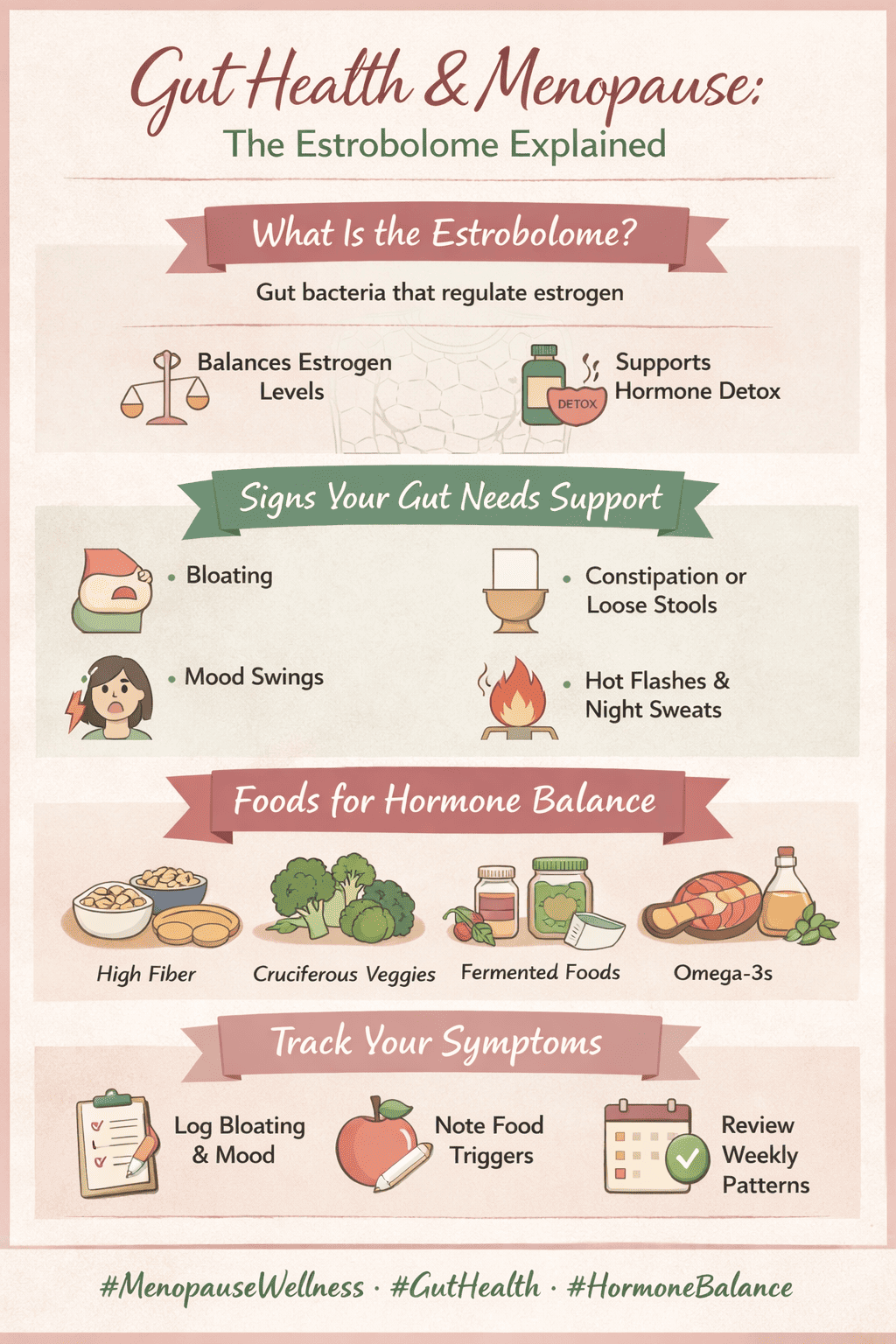
What Is the Estrobolome? (Explained Simply)
The estrobolome is the collection of gut bacteria that help metabolize and regulate estrogen in your body.
Think of it as your estrogen recycling system.
Here’s how it works:
- Your liver processes estrogen and sends it to the gut for elimination.
- Certain gut bacteria produce an enzyme called β‑glucuronidase.
- This enzyme decides whether estrogen should be:
- Eliminated (ideal when estrogen is too high), or
- Reabsorbed (helpful when estrogen is low).
When the estrobolome is healthy, this system works beautifully.
But when the gut is imbalanced — due to stress, antibiotics, low fiber, poor sleep, inflammation, or hormonal shifts — the estrobolome becomes disrupted.
This can lead to:
- Too much estrogen recirculating → worsening PMS‑like symptoms, breast tenderness, heavy periods in perimenopause
- Too little estrogen available → hot flashes, vaginal dryness, mood changes, joint pain
- Increased inflammation → bloating, weight gain, fatigue
Research shows that gut diversity naturally declines after menopause, which means the estrobolome becomes less efficient. This is one reason many women suddenly experience digestive changes in their 40s and 50s.
But the good news? You can nourish your estrobolome back into balance.
Signs Your Gut Needs Support During Menopause
Your body is always communicating with you. Here are the most common signs your gut–hormone axis needs attention:
1. Bloating that comes and goes
Hormonal fluctuations slow digestion, and low estrogen affects gut motility. If you feel bloated after meals or at random times, your gut bacteria may be shifting.
2. Constipation or loose stools
Estrogen influences how quickly food moves through your digestive tract. Gut imbalance can amplify this.
3. Weight gain around the belly
A disrupted estrobolome can affect insulin sensitivity, inflammation, and fat storage.
4. Worsening hot flashes or night sweats
Inflammation in the gut can intensify vasomotor symptoms.
5. Mood swings, anxiety, or irritability
Your gut produces 90% of your serotonin — the “feel‑good” hormone.
6. Fatigue and low energy
Gut imbalance affects nutrient absorption and inflammation levels.
7. Skin changes
Acne, dryness, or rosacea can flare when the gut is inflamed.
8. Food sensitivities that never existed before
A weakened gut lining can make you more reactive to certain foods.
If you’re nodding along to several of these, your estrobolome may need gentle support.
“Grab the Menopause Journal Tracker Bundle today and get the Self‑Compassion Journal completely free — your wellbeing deserves this.”
Foods That Support Hormone Detox & a Healthy Estrobolome
Food is one of the most powerful tools for balancing your gut and hormones. You don’t need extreme diets or complicated protocols — just consistent, nourishing choices.
Here are the most supportive categories:
1. High‑Fiber Foods (Your Estrogen Detox Superstars)
Fiber helps your body eliminate excess estrogen and feeds beneficial gut bacteria.
Include:
- Oats
- Chia seeds
- Flaxseeds
- Lentils
- Beans
- Berries
- Apples
- Sweet potatoes
Aim for 25–35g of fiber daily, but increase slowly to avoid bloating.
2. Cruciferous Vegetables (Natural Estrogen Metabolizers)
These contain compounds that support estrogen detox pathways in the liver.
Try:
- Broccoli
- Cauliflower
- Kale
- Cabbage
- Brussels sprouts
- Bok choy
Lightly steaming them makes them easier to digest.
3. Fermented Foods (Gut Diversity Boosters)
These help replenish beneficial bacteria — essential for a healthy estrobolome.
Include:
- Yogurt
- Kefir
- Kimchi
- Sauerkraut
- Miso
- Tempeh
Start with small amounts if you’re sensitive.
4. Prebiotic Foods (Food for Your Good Bacteria)
Prebiotics help your gut bacteria thrive.
Examples:
- Garlic
- Onions
- Leeks
- Asparagus
- Bananas
- Oats
- Jerusalem artichokes
These are especially helpful if you’re not ready for probiotics yet.
5. Phytoestrogen‑Rich Foods (Gentle, Plant‑Based Estrogen Support)
These foods can help ease symptoms of low estrogen.
Include:
- Flaxseeds
- Soy (tofu, tempeh, edamame)
- Sesame seeds
- Chickpeas
Research shows phytoestrogens may reduce hot flashes and support bone health.
6. Anti‑Inflammatory Foods (Calm the Gut–Hormone Axis)
Chronic inflammation worsens menopause symptoms.
Focus on:
- Olive oil
- Fatty fish (salmon, sardines)
- Turmeric
- Ginger
- Berries
- Leafy greens
These foods help soothe the gut lining and reduce bloating.
🌿 Explore the SproutHealth Wellness Shop
Visit SproutHealth.co
to shop our curated collection of wellness, home, beauty, fitness, and lifestyle essentials.
Discover thoughtful products designed to bring comfort, ease, and inspiration into your everyday life.
Tracking Bloating & Symptoms: Why It Matters
One of the most empowering things you can do during midlife is track your symptoms.
Not obsessively — just gently, with curiosity.
Tracking helps you identify patterns between:
- Food
- Stress
- Sleep
- Menstrual cycle (if still cycling)
- Gut symptoms
- Mood
- Hot flashes
- Bowel habits
Women often discover:
- Certain foods trigger bloating only during specific hormonal phases
- Stress worsens gut symptoms more than food
- Poor sleep leads to next‑day bloating
- Hot flashes flare when digestion is sluggish
- Fiber intake directly affects mood and energy
Awareness is the first step toward balance.
How to Support Your Estrobolome Daily
Here’s a simple, gentle routine your readers can follow:
Morning
- Warm lemon water
- Fiber‑rich breakfast (oats + chia + berries)
- 10 minutes of sunlight
Afternoon
- A serving of fermented food
- Hydration
- A balanced lunch with protein + fiber + healthy fats
Evening
- Light, easy‑to‑digest dinner
- Herbal tea (ginger, peppermint, chamomile)
- Gentle movement or stretching
Weekly
- 3–4 servings of cruciferous vegetables
- 2–3 servings of fatty fish
- A variety of colorful fruits and vegetables
Lifestyle
- Prioritize sleep
- Reduce stress
- Move your body daily
- Limit alcohol (it disrupts gut bacteria)
Small steps create big hormonal shifts.
FAQs: What Women Ask Most About Gut Health & Menopause
1. Why am I suddenly bloated during perimenopause?
Hormonal fluctuations slow digestion and alter gut bacteria, leading to gas, bloating, and irregular bowel habits.
2. Can gut health really affect hot flashes?
Yes. Inflammation in the gut can intensify vasomotor symptoms like hot flashes and night sweats.
3. What is β‑glucuronidase and why does it matter?
It’s an enzyme produced by gut bacteria that helps regulate estrogen recycling. Too much or too little can disrupt hormone balance.
4. Do probiotics help during menopause?
They can — especially strains that support digestion, inflammation, and estrogen metabolism. But food‑based probiotics are a great place to start.
5. Why do I gain weight around my belly during menopause?
A disrupted estrobolome affects insulin sensitivity, inflammation, and fat storage — all of which contribute to midsection weight gain.
6. Can food alone balance my hormones?
Food is powerful, but it works best alongside sleep, stress management, and movement.
7. How long does it take to improve gut health?
Most women notice changes within 2–6 weeks of consistent habits.
8. Should I avoid gluten or dairy?
Only if you notice symptoms after eating them. Tracking helps you identify personal triggers.
✨ Download Your Free Gut & Hormone Tracker
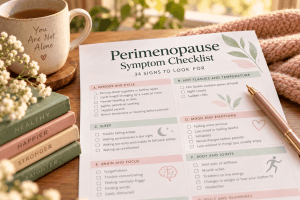
Take control of your midlife wellness with this beautifully designed Gut & Hormone Tracker. It helps you understand your bloating patterns, mood shifts, sleep quality, food triggers, and hormone symptoms — all in one simple, printable PDF.
Click below to download your free tracker:
👉 Download the Gut & Hormone Tracker (PDF)
This tracker includes:
- A 7‑day daily gut & hormone log
- Weekly patterns review
- Symptom checklist
- Food & lifestyle habits log
- Monthly reflection prompts
Use it daily to spot patterns, reduce bloating, support your estrobolome, and feel more balanced through perimenopause and menopause.
Final Thoughts: Your Gut Is Your Ally in Midlife
Your body isn’t working against you — it’s communicating with you.
Your gut and hormones are deeply interconnected, and when you support one, you support the other. The estrobolome is a powerful, elegant system designed to help you thrive through every stage of womanhood.
With the right foods, gentle lifestyle shifts, and compassionate awareness, you can reduce bloating, improve mood, support estrogen balance, and feel more at home in your body again.
You deserve to feel vibrant, clear, and supported — at every age.
Related reading: part of our Complete Guide to Perimenopause and Menopause