
For years, I walked past purslane at the grocery store without giving it much thought.
There were always so many familiar greens to choose from—spinach, drumstick leaves, fenugreek, amaranth and coriander—that this slightly succulent, tangy little plant rarely made it into my basket.
Then I discovered just how interesting purslane really is.
Known in different parts of the world as purslane and botanically as Portulaca oleracea, this humble leafy vegetable has been eaten traditionally across Asia, the Mediterranean and other regions for generations. It is sometimes treated as a weed, yet nutritionally it is anything but ordinary.
And when we look at food through the lens of perimenopause, purslane becomes even more interesting.
Perimenopause is a time when the body is going through significant hormonal changes. Estrogen and progesterone fluctuate, periods may become unpredictable, sleep can change, body composition may shift, and symptoms such as hot flashes, mood changes and fatigue can appear.
There is no single “perimenopause food” that can fix all of this.
But there are foods that can help us build a nourishing foundation.
Purslane is one of them.
It provides a combination of plant nutrients, minerals, antioxidants and alpha-linolenic acid (ALA), a plant-based omega-3 fatty acid. Research reviews describe purslane as particularly notable among leafy vegetables for its ALA content, along with vitamin C, vitamin E, carotenoids and minerals such as potassium, magnesium and calcium.
So, could this little green be worth bringing back to the kitchen during perimenopause?
Absolutely.
Not as a miracle cure.
But as one more beautiful, traditional food to add variety and nourishment to your plate.
What Is Purslane?
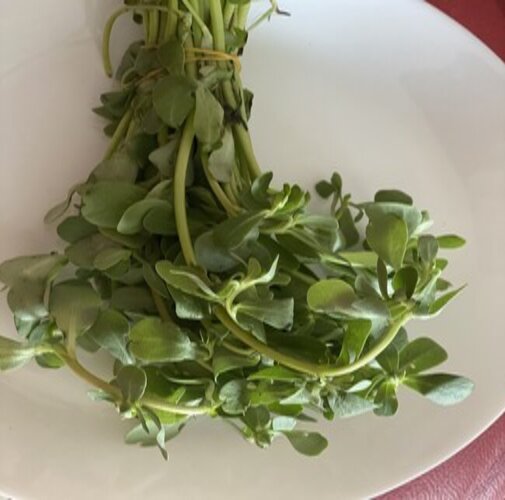
Purslane (Portulaca oleracea) is a low-growing succulent plant with small, fleshy leaves and tender stems.
It has a slightly sour, refreshing and salty flavor, which makes it quite different from many of the leafy greens we regularly eat.
Purslane has been used as a traditional food in many parts of the world. It can be eaten raw in salads or cooked into curries, dals, soups and vegetable dishes.
In India, regional names and culinary traditions vary. In North India, it is commonly known as Luni-bhaji in some regions.
For many families, foods like this are not new “superfoods” at all.
They are traditional ingredients that have simply been overlooked by modern food culture.
And perhaps that is part of what makes purslane so appealing.
It doesn’t need an elaborate wellness trend.
It just needs a place on the plate.
Why Perimenopause Changes the Nutrition Conversation
Perimenopause is not an illness.
It is a natural stage of reproductive aging.
But it can be a surprisingly demanding transition for the body.
Hormonal fluctuations can occur years before the final menstrual period, and women may notice changes in:
- Sleep
- Energy
- Mood
- Appetite
- Body composition
- Menstrual patterns
- Temperature regulation
- Muscle strength
- Bone health
- Cardiometabolic health
At the same time, midlife is a period when nutrition becomes increasingly important for maintaining muscle, supporting bones, caring for cardiovascular health and encouraging healthy aging.
Recent reviews emphasize the importance of balanced nutrition during perimenopause and menopause, including adequate protein, calcium, vitamin D, fiber and a variety of vegetables and fruits.
This is why I prefer to think about perimenopause nutrition as building nourishment rather than following a restrictive “hormone diet.”
You don’t need to eat perfectly.
You need enough variety.
And purslane can be part of that variety.
What Makes Purslane Nutritionally Interesting?
Purslane contains a fascinating combination of nutrients and plant compounds.
Depending on variety, growing conditions and preparation, its nutritional composition can vary. Research reviews have identified:
- Alpha-linolenic acid (ALA)
- Vitamin C
- Vitamin E
- Carotenoids
- Potassium
- Magnesium
- Calcium
- Iron
- Fiber
- Various polyphenols and flavonoids
- Other plant compounds
One of the characteristics that makes purslane particularly interesting is its alpha-linolenic acid (ALA) content. Some reviews describe purslane as an unusually rich plant source of ALA compared with other leafy vegetables.
But there is an important distinction.
ALA is not the same as EPA or DHA.
Purslane contains ALA, while the amounts of EPA and other long-chain omega-3 fatty acids reported in some studies are much smaller. Therefore, it would be misleading to present purslane as equivalent to oily fish or an EPA/DHA supplement.
Still, having a leafy vegetable that contributes plant-based omega-3 ALA is quite remarkable.
And that is where purslane becomes especially interesting for a plant-forward perimenopause diet.
1. Purslane and Omega-3 ALA
Omega-3 fats are often discussed in relation to women’s health.
Purslane’s most distinctive nutritional feature is its alpha-linolenic acid (ALA).
ALA is an essential fatty acid, meaning our bodies cannot make enough of it and we need to obtain it through food.
The body can convert some ALA into EPA and DHA, although this conversion is limited and varies among individuals.
So purslane should not be viewed as a replacement for all other omega-3 sources.
Instead, think of it as one small plant contribution to an overall omega-3-rich eating pattern.
Other sources include:
- Flaxseed
- Chia seeds
- Walnuts
- Soy foods
- Certain plant oils
- Oily fish for those who eat fish
During perimenopause, this kind of dietary variety matters far more than focusing on a single “superfood.”
2. Antioxidants and the Perimenopause Years
Purslane contains several antioxidant-related compounds, including vitamin C, vitamin E, carotenoids and polyphenols.
Why does this matter?
Our bodies naturally produce reactive molecules as part of normal metabolism. Oxidative stress occurs when production and antioxidant defenses become imbalanced.
That doesn’t mean we need to “detox” our bodies with special foods.
Our liver, kidneys, lungs and other systems already perform the body’s detoxification functions.
A better approach is to regularly eat a variety of plant foods that provide antioxidants and other beneficial compounds.
Purslane can contribute to that diversity.
And I think this is a much healthier way to think about “antioxidant foods.”
Not:
“This food will detox your body.”
But:
“This food gives my body useful nutrients and plant compounds.”
That is a much more sustainable approach to wellness.
3. Supporting Bone-Friendly Nutrition
Bone health deserves special attention as women move through midlife.
Estrogen changes around menopause are associated with accelerated bone loss, making adequate nutrition, physical activity and other preventive strategies increasingly important.
Current Indian menopause guidance emphasizes adequate calcium, vitamin D, protein, physical activity and balanced dietary patterns as important components of bone health.
Purslane contains calcium and magnesium, although it should not be considered a stand-alone solution for meeting calcium requirements.
Think of it as one green among many.
You might pair purslane with:
- Curd or yogurt
- Milk
- Ragi
- Sesame seeds
- Tofu
- Beans and lentils
- Other calcium-containing greens
This is one reason I love traditional Indian meals.
A simple combination of greens + dal + curd + whole grains can provide a much broader nutritional package than any fashionable “hormone-support” powder.
4. Fiber for Digestion and Metabolic Health
Perimenopause can sometimes bring changes in appetite, digestion and body composition.
Fiber-rich foods can help support digestive health and contribute to a satisfying eating pattern.
Purslane contains dietary fiber, and because it is a vegetable, it can add volume and variety to meals without making them unnecessarily heavy.
But again, the goal is not to eat purslane alone.
Combine it with:
vegetables + legumes + whole grains + fruit + nuts and seeds.
This kind of dietary pattern is much more meaningful for long-term health than concentrating on one ingredient.
5. Heart Health Matters During Midlife
The menopause transition is also an important time to become more intentional about cardiovascular health.
Research on Mediterranean-style eating patterns in menopausal women suggests potential benefits for cardiovascular risk factors, including blood pressure and blood lipids, while also supporting overall healthy aging.
Purslane fits beautifully into this broader philosophy.
It is a vegetable.
It provides fiber and plant compounds.
It contributes ALA.
And it can be incorporated into meals built around legumes, whole grains, vegetables, fruit, nuts, seeds and healthy fats.
That is where the real magic lies.
Not in purslane alone.
But in the pattern of eating.
6. Could Purslane Help With Hot Flashes?
This is where we need to be careful.
You may come across claims online that purslane “balances hormones,” “reduces hot flashes,” or “treats menopause symptoms.”
There isn’t enough high-quality human evidence to make those claims confidently.
Purslane contains interesting compounds, and laboratory and animal research has investigated antioxidant, anti-inflammatory, metabolic and other biological effects. But these findings should not automatically be translated into claims that eating purslane will treat perimenopausal symptoms.
So I would not call purslane a hot-flash remedy.
Instead, I would say:
Purslane can be part of a nutrient-dense dietary pattern that supports overall health during perimenopause.
That distinction matters.
7. What About Hormone Balance?
The phrase “hormone balance” is everywhere in women’s wellness.
But hormones are not meant to be permanently “balanced” at one fixed level.
During perimenopause, ovarian hormone production naturally becomes more variable.
The goal isn’t to force hormones into a particular number with food.
The goal is to support the body with:
- Adequate nutrition
- Regular movement
- Sufficient protein
- Healthy fats
- Fiber
- Good sleep
- Stress management
- Bone-supportive nutrients
- Cardiovascular-friendly eating habits
- Appropriate medical care when symptoms need treatment
Purslane can contribute to the nutrition piece.
It cannot replace the rest.
8. Purslane, Stress and the Midlife Body
Stress deserves a place in the perimenopause conversation too.
Many women reach their 40s carrying multiple responsibilities—career, children, aging parents, household responsibilities and countless invisible tasks.
Then hormonal changes arrive at the same time.
It can feel like the body is asking for a slower pace while life keeps asking for more.
Nutrition cannot eliminate stress.
But regular meals built around whole foods can provide a more stable nutritional foundation.
And sometimes the most helpful approach is surprisingly simple:
Eat something nourishing.
Drink some water.
Go outside.
Move your body.
Take a breath.
Rest when you can.
Then begin again.
Purslane can simply be one of the nourishing foods that makes its way into that routine.
9. Purslane and Healthy Weight During Perimenopause
Body composition can change during the menopause transition, and many women notice that weight management no longer feels as straightforward as it once did.
This can tempt us toward restrictive diets.
But aggressive dieting is rarely the answer.
A more sustainable approach is to focus on nutrient density and strength.
Build meals around:
Protein + vegetables + high-fiber carbohydrates + healthy fats.
Purslane fits naturally into the vegetable portion.
Add dal, beans, eggs, fish, tofu, paneer or another protein source depending on your dietary pattern.
Include whole grains or other satisfying carbohydrate sources.
Add nuts, seeds or healthy oils.
And allow yourself to enjoy your food.
Perimenopause is not the time to punish your body for changing.
It is a time to nourish it differently.
10. A Traditional Indian Way to Enjoy Purslane
One of my favorite things about purslane is that it doesn’t require a complicated recipe.
It can be cooked just like many other leafy vegetables.
A simple preparation with onions, tomato, cumin, chilies and dal turns it into a comforting meal that feels much more like home cooking than “health food.”
And that matters.
Healthy food should still be enjoyable.
Luni Bhaji Dal: A Simple Perimenopause-Friendly Meal
Ingredients
- 2–3 cups fresh purslane, thoroughly washed
- 1 cup cooked dal
- 1–2 onions, chopped
- 1 tomato, chopped
- ½ teaspoon cumin seeds
- 2 green chilies, chopped, optional
- ½ teaspoon turmeric powder
- ½ teaspoon chili powder, optional
- 2 garlic cloves, chopped
- A few curry leaves
- Salt to taste
- 1–2 teaspoons cooking oil
- Fresh coriander leaves
- A small amount of ghee, optional
Method
- Wash the purslane thoroughly and chop the tender stems and leaves.
- Cook the dal with turmeric, garlic, cumin and curry leaves until soft.
- Heat a little oil in a pan and add the cumin seeds.
- Add the onions and green chilies and sauté until the onions become soft.
- Add the chopped tomato and cook until it becomes tender.
- Add the purslane and cook until the leaves and stems soften.
- Add the cooked dal and combine everything well.
- Season with salt and a little chili powder if desired.
- Simmer for a few minutes so the flavors come together.
- Finish with fresh coriander.
Serve with steamed rice, brown rice, millet or chapati.
For an even more complete meal, serve it with curd or another protein-rich accompaniment.
Why This Meal Works So Well for Midlife
This isn’t a “menopause cure.”
It is simply a well-rounded traditional meal.
The dal provides plant protein and fiber.
The purslane contributes vegetables, ALA, minerals and plant compounds.
The tomato and other vegetables add additional vitamins and phytochemicals.
A serving of curd, if included, contributes protein and calcium.
A whole grain or millet provides carbohydrate and additional fiber.
This is exactly the kind of practical nutrition that can make perimenopause eating feel less complicated.
A Small Safety Note About Purslane
There is one reason not to over-romanticize purslane.
Purslane can contain significant amounts of oxalates. Older nutritional analyses have reported substantial oxalate concentrations, and rare case reports have described oxalate-related kidney injury associated with very high dietary consumption.
This doesn’t mean healthy people need to be afraid of eating purslane as a normal vegetable.
But moderation and variety make sense.
If you have a history of kidney stones, kidney disease, or have been advised by your healthcare professional to limit dietary oxalate, discuss whether purslane is appropriate for you.
And as with any wild or foraged plant, make sure the plant has been correctly identified and comes from a clean, food-safe source.
Fresh Purslane or Purslane Supplements?
Today, purslane is also sold as:
- Dried herbs
- Powders
- Extracts
- Capsules
- Seeds for growing
But for a perimenopause nutrition article, I would place the whole food first.
A fresh leafy vegetable gives you more than one isolated compound.
It becomes part of a meal.
It adds texture and flavor.
It can replace or complement other greens.
And it encourages dietary variety.
Supplements are a different category altogether and should not automatically be assumed to provide the same benefits as eating the whole plant.
More concentrated does not necessarily mean better.
What About Purslane Seeds?
If you enjoy gardening, purslane can also be an interesting plant to grow.
Its ability to tolerate heat and relatively dry conditions has attracted attention from researchers interested in resilient food crops.
Growing your own greens can also make healthy eating feel more connected to everyday life.
There is something deeply satisfying about walking into your garden, picking a handful of fresh leaves and turning them into lunch.
That is wellness too.
Not just nutrients.
But connection.
The Bigger Perimenopause Plate
If you’re wondering what to eat during perimenopause, don’t let the search for the “best” food become another source of stress.
There is no single perfect ingredient.
Instead, build a colorful, varied plate.
Think about including:
Protein
Dal, beans, lentils, eggs, fish, tofu, paneer, curd or other suitable protein sources.
Vegetables
Purslane, spinach, drumstick leaves, carrots, tomatoes, broccoli, gourds, beans and many other seasonal vegetables.
Fruit
Choose a variety rather than focusing on one “hormone-balancing” fruit.
Whole grains
Millets, oats, brown rice, whole wheat and other minimally processed grains can provide fiber and energy.
Healthy fats
Nuts, seeds, olive oil and other unsaturated-fat sources can fit into a balanced eating pattern.
Calcium-rich foods
Curd, milk, fortified alternatives, tofu, sesame, and calcium-containing greens can all contribute.
Omega-3 sources
Purslane and other plant sources provide ALA; fish and certain algae-based foods provide EPA/DHA.
This approach is much more powerful than searching for a miracle food.
Purslane Is a Supporting Character, Not the Main Character
I think this is the most important message.
Purslane is fascinating.
It is nutritious.
It is affordable in many places.
It is traditional.
It is versatile.
And its ALA content makes it especially interesting among leafy vegetables.
But it doesn’t need to be marketed as a miracle.
It doesn’t need to “flush out estrogen.”
It doesn’t need to “reset your hormones.”
It doesn’t need to cure hot flashes.
And it certainly doesn’t need to replace medical treatment.
Its value is much simpler.
It is a nutrient-dense vegetable that can be part of a nourishing diet.
And sometimes simple is exactly what we need.
🌱 Bring Purslane Into Your Kitchen & Garden
Non-GMO Heirloom Purslane Seeds: Nutrient-Rich and Easy to Grow
These premium Non-GMO Heirloom Purslane Seeds are selected for high germination rates, ensuring fast growth and robust results in any garden, indoors or outdoors. Packed with Omega-3s, vitamins, and minerals, purslane is a nutrient-rich superfood and medicinal herb, perfect for enhancing salads, soups, and stews. The seeds are heat and drought-tolerant, ideal for low-maintenance gardening in hot, dry climates.
Purslane can be grown in containers, rock gardens, herb spirals, or traditional garden spaces. This fast-growing, self-seeding variety guarantees continuous growth year after year. Its low-growing succulent leaves provide lush ground cover while attracting beneficial insects, promoting a thriving ecosystem.
Trust in a veteran-owned American business for expert guidance, ensuring your heirloom Purslane seeds flourish into a vibrant herb garden.
Shop now
Purslane Herb – Dried and Cut
Enjoy the nutritional benefits of purslane with this dried and cut vegetable, which is similar to spinach. Perfect for mixing with yogurt to create a delicious and healthy Tzatziki. This 100% natural product is Kosher and Halal, ensuring it meets dietary requirements. Elevate your meals with the rich nutrients and unique flavor of purslane.
My Perimenopause Takeaway
When I look back at all those times I walked past purslane, I realize how easy it is to overlook foods that don’t have a glamorous reputation.
We are constantly searching for the newest powder, supplement, drink or “hormone-balancing” food.
But many of the foods that can nourish us have been sitting quietly in our kitchens and gardens for generations.
Purslane is one of them.
During perimenopause, I don’t want food to become another list of rules.
I want food to feel supportive.
Comforting.
Colorful.
Nourishing.
And realistic.
So if you see a bunch of fresh purslane the next time you’re shopping, perhaps don’t walk past it.
Bring some home.
Wash it.
Cook it with dal.
Add it to a salad.
Try it with yogurt.
And see how you like it.
Because taking care of ourselves in midlife doesn’t have to mean chasing perfection.
Sometimes it can begin with something as simple as adding one more nourishing green to dinner.
Your body is changing. Your needs are changing. And your food can change with you.
A Gentle Reminder
Purslane is a nutritious food, not a treatment for perimenopause, hormonal imbalance, diabetes, cancer, liver disease or any other medical condition. Research into purslane’s antioxidant, anti-inflammatory, metabolic and other biological properties is promising but includes laboratory, animal and limited human research; these findings should not be interpreted as proof that eating purslane treats disease.
If you are experiencing severe hot flashes, persistent sleep problems, abnormal bleeding, significant mood changes, or other concerning symptoms during perimenopause, speak with a qualified healthcare professional.
And remember: there is no prize for suffering through perimenopause alone.
Good nutrition, movement, restorative sleep, stress management and appropriate medical support can all have a place in this transition.
References
- Review of the nutritional composition and bioactive compounds of Portulaca oleracea.
- Review of purslane as a source of omega-3 alpha-linolenic acid and antioxidant compounds.
- Review of omega-3 polyunsaturated fatty acids and plant sources including purslane.
- Review of nutrition during perimenopause and menopause.
- Evidence on Mediterranean-style dietary patterns and menopausal health.
- Indian Menopause Society 2026 clinical practice guidance, including nutrition and bone-health considerations.
Related reading: