

In a world that constantly asks us to move faster, achieve more, and stay endlessly connected, creating a wellness sanctuary at home feels like a quiet, powerful act of self-respect. It is a gentle rebellion against burnout — and a return to balance, presence, and inner nourishment.
A wellness sanctuary is not about aesthetics alone. It is a space designed to support your nervous system, regulate your emotions, and invite your body into a state of safety and rest. Science now confirms what ancient wisdom has always known: the environments we inhabit deeply influence how we feel, think, and heal.
The beauty of a home sanctuary is that it is timeless. No matter the year, the season, or the stage of life you are in, the need for calm, grounding, and inner connection remains constant. And the best part? You don’t need a large home, expensive décor, or complicated rituals. You need intention, awareness, and a few mindful choices.
Let us explore how to create a wellness sanctuary at home — a space that feels like a deep exhale every time you step into it.

1. Begin With Intention: The Emotional Purpose of Your Space
Every sanctuary begins with intention. Before rearranging furniture or buying anything new, pause and reflect:
-
Do I need calm and nervous system regulation?
-
Do I want a space for meditation, prayer, or reflection?
-
Am I craving emotional grounding or mental clarity?
-
Do I need a place to rest, journal, or simply be?
Your intention becomes the emotional blueprint of your sanctuary. Neuroscience shows that intentional environments help the brain shift out of fight-or-flight mode and into parasympathetic (rest-and-restore) response.
When your intention is clear, every choice — lighting, scent, texture, and sound — becomes aligned with your emotional wellbeing.
2. Choose Your Sanctuary Space (Small Spaces Work Beautifully)
A wellness sanctuary does not require an entire room. It can exist in:
-
A bedroom corner
-
A space near a window
-
A section of your living room
-
A balcony or outdoor nook
-
Even a bedside area
What matters most is consistency. When you return to the same space daily for calm or reflection, your brain begins to associate that location with safety and relaxation. Over time, simply entering the space signals your body to slow down.
Even one square meter can become a sanctuary when designed with care.
3. Declutter to Calm the Mind
Clutter is not just visual — it is neurological. Research shows that clutter increases cortisol (the stress hormone) and overwhelms the brain’s ability to focus and relax.
To declutter mindfully:
-
Clear flat surfaces
-
Remove items that feel emotionally heavy
-
Keep only objects that serve your sanctuary’s intention
A wellness sanctuary thrives on simplicity and spaciousness. When your environment is uncluttered, your inner world follows.
4. Use Lighting to Regulate Your Nervous System
Lighting directly affects your circadian rhythm and emotional state.
Choose:
-
Warm, soft lighting
-
Table lamps instead of harsh overhead lights
-
Aromatherapy or Himalayan salt lamps
-
Flameless candles for evening rituals
-
Natural daylight whenever possible
Warm lighting signals safety to the nervous system, helping your body transition from alertness to rest.
5. Bring Nature Indoors for Emotional Balance
Nature is a powerful healer. Studies show that even brief exposure to greenery lowers anxiety, improves mood, and enhances focus.
Consider adding:
-
Indoor plants (low-maintenance options work well)
-
Natural materials like wood, cotton, linen, or stone
-
Earth-toned colors such as sage, sand, clay, and terracotta
These elements ground your space and gently remind your body that it is supported and connected.
6. Aromatherapy: A Direct Path to Emotional Healing
Scent is processed in the limbic system — the emotional center of the brain — making aromatherapy one of the fastest ways to shift mood.
Use:
-
Essential oil diffusers
-
Aromatherapy lamps
-
Scented humidifiers
-
Roll-on oils for rituals
Choose oils intentionally:
-
Lavender – relaxation and sleep
-
Bergamot – emotional uplift
-
Eucalyptus – mental clarity
-
Frankincense – spiritual grounding
-
Sandalwood – nervous system balance
Your sanctuary should smell like safety, comfort, and peace.
7. Design a Healing Sound Environment
Sound has a profound effect on the nervous system.
Support emotional regulation with:
-
Soft instrumental music
-
Nature sounds (rain, ocean, forest)
-
White noise or gentle frequency music
-
Singing bowls or wind chimes
-
Intentional silence
Silence itself can be deeply healing when chosen consciously.
8. Invite Comfort Through Touch and Texture
The sense of touch is essential for emotional safety.
Include:
-
Soft blankets or shawls
-
Cushions or floor pillows
-
A cozy rug
-
A meditation mat or comfortable chair
Choose textures that feel nurturing and grounding. Your body should feel supported the moment it enters the space.
9. Create a Ritual Corner for Daily Grounding
Rituals help calm the nervous system and bring a sense of emotional steadiness. A small, intentional corner can become a place where you pause, reflect, and reconnect with what matters most.
Your ritual corner may include:
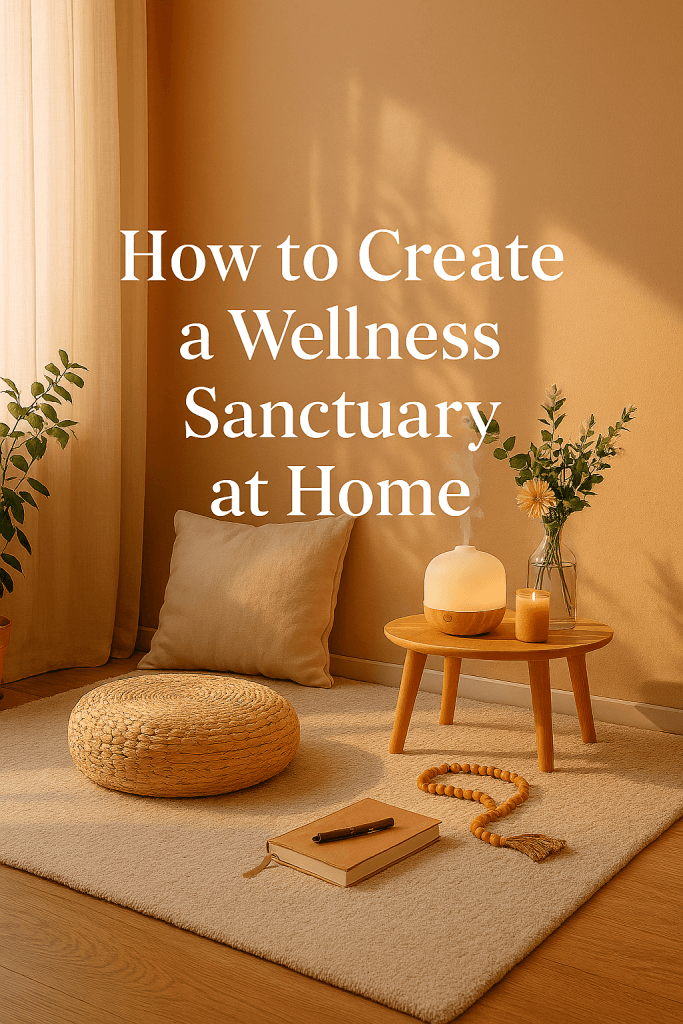
- An inspiring book or daily reading: Something that brings clarity, comfort, or wisdom.
- A gratitude or reflection journal: A space to write your thoughts, hopes, and moments of appreciation.
- A meaningful symbol or object: Something that reminds you of inner strength, peace, or guidance.
- A soft lamp or gentle candlelight: Warm light that creates a calming atmosphere.
- A comfortable cushion or chair: A cozy spot where you can sit quietly, breathe, and unwind.
This becomes a quiet sanctuary where you return to yourself — gently, consistently, and with intention.
10. Integrate Wellness Tools With Intention
Technology can support wellbeing when used mindfully.
Helpful additions include:
-
Essential oil diffusers
-
Air purifiers
-
Humidifiers
-
Breathwork or meditation tools
Ensure that every tool enhances presence rather than distraction.
11. Personalize With Meaning
A sanctuary should reflect your inner world, not trends.
Add:
-
Meaningful photographs
-
Calming artwork
-
Inspiring books
-
Objects with emotional significance
A sanctuary is not about perfection — it is about resonance and emotional truth.
12. Allow Your Sanctuary to Evolve
Your needs will change — and your sanctuary can change with you.
You may:
-
Introduce new scents
-
Rearrange furniture
-
Shift rituals with the seasons
-
Add or remove elements
Your sanctuary is a living reflection of your healing journey.
Conclusion
Creating a wellness sanctuary at home is a powerful act of self-love and intentional living. It is a space where your body feels safe, your mind softens, and your spirit can breathe.
You do not need perfection.
>You only need presence, intention, and a willingness to care for yourself deeply.
Your home can become your healing partner — one mindful corner at a time.
❓ FAQs: How to Create a Wellness Sanctuary at Home
1. Do I need a large space?
No. A small, consistent corner is more powerful than a large unused room.
2. What matters most in a sanctuary?
Your intention. Everything else supports that emotional purpose.
3. How do I maintain it long-term?
Declutter regularly, refresh scents and rituals, and listen to your evolving needs.
4. Best scents for relaxation?
Lavender, chamomile, sandalwood, frankincense, and bergamot.
5. Can I create one on a budget?
Absolutely. Decluttering, lighting, nature, and scent are affordable yet deeply effective.