

This article is for general information and gentle support, not medical advice. A checklist cannot diagnose perimenopause. Please speak with your doctor (or GP) about your own symptoms and health history.
Some months it is the hot flash in the middle of a meeting. Other months it is the sudden tearfulness over something small, or the 3 AM wake-up with a mind that will not switch off. Perimenopause rarely arrives with a neat label. It shows up as a scatter of small changes, and because they come and go, it is very easy to doubt yourself: “Is this really my hormones, or am I just tired?”
A checklist cannot hand you a diagnosis. But it can do something just as useful: it turns a vague feeling into clear, written information. When you can say, “For the last six weeks I have woken at 3 AM four nights a week, my periods have shifted by ten days, and my mood is lowest the week before bleeding,” you are no longer easy to dismiss. You have a pattern, and patterns are what doctors need.
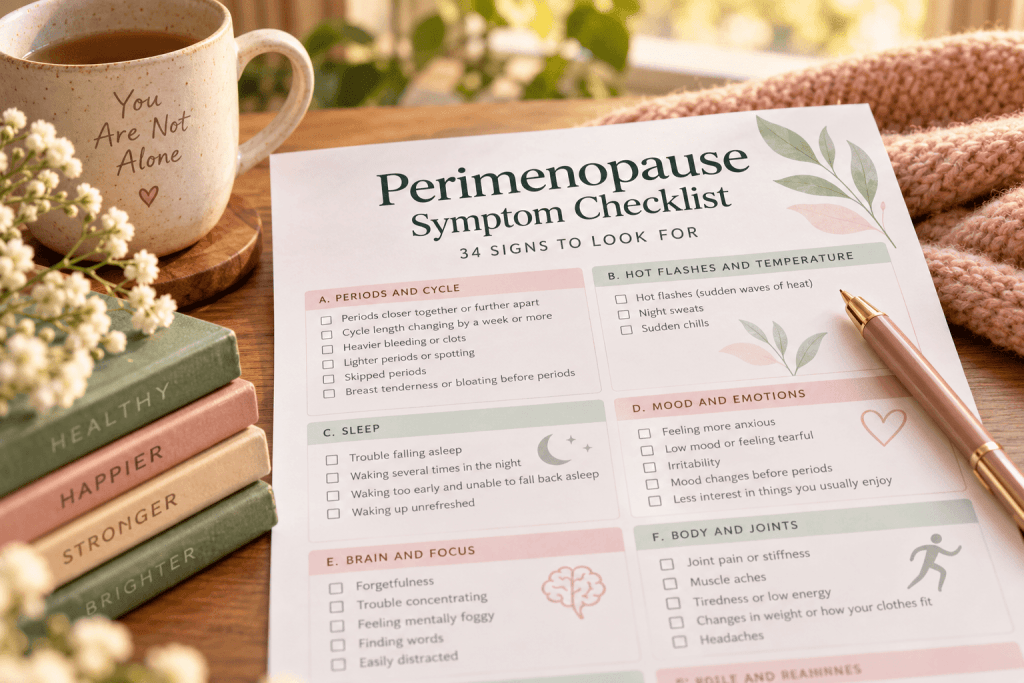
That is why I made this free printable perimenopause symptom checklist. It covers 34 of the most commonly reported symptoms in eight groups, and in this guide I will walk you through each group, share what research says about it, and explain how to use your results. Let’s begin.
Key takeaways
- Perimenopause shows up differently in every woman. You do not need every symptom, and many women notice only a few.
- The earliest and most reliable clue is a change in your cycle: researchers define the start of the transition as a persistent difference of seven days or more between consecutive cycle lengths.
- Of all the symptoms studied, hot flashes, vaginal dryness and sleep problems are the ones that most clearly change as women move through the transition.
- Many other conditions, such as thyroid problems and low iron, can look like perimenopause, so a checklist is a conversation starter, not a verdict.
- Track for 4 to 8 weeks before your appointment. Written notes help you feel heard.
Free Printable: Perimenopause Symptom Checklist
Two pages, 34 symptoms, with space for your top three concerns and questions for your doctor.
Download (US Letter) | Download (A4)
Prefer to tick along on screen? The full checklist is below.
How to Use This Checklist
- Choose a start date and think about the past four weeks.
- Rate each symptom as none, mild (you notice it), moderate (it affects your day) or severe (it is hard to cope with). There are no right or wrong answers.
- Repeat once a month for two or three months. A single snapshot can mislead, but a trend tells a story.
- Add your cycle details: the date of your last period and how long your cycles usually are.
- Take it to your appointment with your top three concerns circled.
For a day-by-day method, my guide to tracking your perimenopause symptoms shows how to log symptoms in two minutes.
The Perimenopause Symptoms Checklist: 34 Signs to Look For
A. Periods and Cycle
Changes in your periods are the most reliable early signal. Researchers who developed the widely used STRAW+10 staging system define the early menopausal transition as a persistent difference of seven days or more in the length of consecutive cycles, and the late transition as a gap of 60 days or more without a period. Heavy bleeding is also common: in one review, many women had repeated bleeding episodes lasting ten days or longer, and about a third had heavy bleeding lasting three or more days.
- ☐ Periods closer together or further apart than usual
- ☐ Cycle length changing by a week or more from month to month
- ☐ Heavier bleeding or clots
- ☐ Lighter periods or spotting
- ☐ Skipped periods
- ☐ Breast tenderness or bloating before periods
B. Hot Flashes and Temperature
Hot flashes (called hot flushes in the UK and Australia) are the best-known symptom. In the SWAN study, up to 80 per cent of women were reported to have them during the transition, and for women with frequent symptoms the median total duration was 7.4 years. Researchers have also linked frequent hot flashes with markers of cardiovascular risk and with greater bone loss. That is not a reason to panic, but it is one more reason to mention them to your doctor instead of simply “putting up with it.”
- ☐ Hot flashes (sudden waves of heat)
- ☐ Night sweats
- ☐ Sudden chills
More on this in Hot Flashes and Inflammation.
C. Sleep
Sleep is where many women first notice the transition. A SWAN analysis by Howard Kravitz and colleagues found that difficulty falling asleep and staying asleep became more common as women moved through the transition, while waking too early and being unable to fall back asleep became less common from late perimenopause onward. Women who had more frequent hot flashes had higher odds of every kind of sleep difficulty, which suggests that treating night sweats can sometimes improve sleep too.
- ☐ Trouble falling asleep
- ☐ Waking several times in the night
- ☐ Waking too early and unable to fall back asleep
- ☐ Waking up unrefreshed
If your nights are the main problem, start with Why You’re Waking Up at 3AM in Midlife.
D. Mood and Emotions
Mood changes are common, and they are real. In the Harvard Study of Moods and Cycles (Cohen et al., 2006), women with no history of depression were about twice as likely to develop significant depressive symptoms once they entered perimenopause compared with when they were premenopausal. A second 2006 study by Freeman and colleagues pointed to the same period of vulnerability and highlighted the role of life stress. If you feel more irritable, anxious or tearful than usual, you are not weak and you are not imagining it.
- ☐ Irritability or a shorter temper
- ☐ Anxiety or constant worry
- ☐ Low mood or sadness
- ☐ Mood swings or tearfulness
- ☐ Feeling overwhelmed
If low mood lasts more than two weeks, or you ever have thoughts of harming yourself, please seek help straight away from your doctor, a crisis line or your local emergency number.
E. Thinking and Memory
Brain fog can be unsettling. A SWAN study published in Neurology (Greendale et al., 2009) tested memory and thinking in about 2,300 women over several years. Women did not show the usual improvement in learning-type tasks during perimenopause, but their performance rebounded after menopause, which suggests these difficulties are often temporary. Hot flashes, poor sleep and stress all feed brain fog, so supporting them can help.
- ☐ Brain fog
- ☐ Forgetting words or names
- ☐ Trouble concentrating
F. Body and Energy
This group is where symptoms get harder to pin on hormones, because ageing, stress and other health conditions also play a part. Researchers have noted that the symptoms most often reported during the transition include palpitations, headaches, low energy and aches, but that menopausal status is more consistently tied to hot flashes than to physical or psychological symptoms. That does not make your joint aches or fatigue any less real. It simply means that these symptoms deserve a proper check, not an assumption.
- ☐ Joint aches or stiffness
- ☐ Headaches or migraines
- ☐ Racing or pounding heart (palpitations)
- ☐ Fatigue or low energy
- ☐ Weight gain around the middle
- ☐ Bloating or digestive changes
For digestion and the gut-hormone link, see Gut Health and Menopause. Please have palpitations checked, especially if they come with chest pain, dizziness or breathlessness.
G. Skin and Hair
Estrogen helps support skin and hair, so changing levels can show up as dryness, itching or shedding. Thinning hair also has other common causes, including low iron and thyroid problems, which is a good reason to mention it to your doctor.
- ☐ Dry or itchy skin
- ☐ Hair thinning or shedding
H. Vaginal, Urinary and Sexual Health
This is the group women are least likely to mention, and one of the most treatable. Vaginal dryness becomes more common as women move through the transition, and doctors now group these changes under the term genitourinary syndrome of menopause. Unlike hot flashes, these symptoms often persist or worsen after menopause without treatment. The good news is that effective help exists, including vaginal moisturisers and low-dose vaginal estrogen, which you can discuss with your doctor.
- ☐ Vaginal dryness
- ☐ Discomfort during intimacy
- ☐ Lower sexual desire
- ☐ Needing to urinate more often or more urgently
- ☐ Leaking when you cough, laugh or sneeze
The Cycle Clues Doctors Look For
Because symptoms overlap with so many other things, cycle changes are the clue doctors trust most. Here is what the research on staging says, in plain language:
- Early transition: your cycle lengths start to vary by a week or more from one cycle to the next. On average this begins about 6 to 8 years before the final period.
- Late transition: you have gaps of 60 days or more between periods. On average this begins about two years before the final period, and hot flashes are most likely at this stage.
- Not everyone follows the script: an estimated 12 to 25 per cent of women have little or no change in cycle length before their final period, so symptoms can appear even when your periods look regular.
- The whole transition is commonly described as lasting about 4 to 10 years, with a longer course in women who start earlier.
If you would like the bigger picture, read Perimenopause vs Menopause: The Real Differences.
What Your Pattern Might Suggest (and What It Can’t)
Please read your results as clues, not conclusions. Here are common patterns, and what I would gently suggest asking your doctor about:
- Cycle changes plus hot flashes and sleep trouble. This is the classic perimenopause picture, especially if you are in your 40s. Bring your checklist and discuss your options.
- Fatigue, hair thinning, weight change and feeling cold. Ask about a thyroid check.
- Heavy bleeding with tiredness, dizziness or breathlessness. Ask about iron levels and anaemia.
- Low mood, loss of interest or hopelessness for more than two weeks. Please ask for a mental health assessment. Hormonal change can contribute, but it should not be assumed to be the only cause.
- Loud snoring, pauses in breathing or morning headaches. Ask about sleep apnoea, which becomes more common in midlife.
- Palpitations, chest pain or breathlessness. Get these checked promptly.
It is also worth knowing that researchers who reviewed symptom studies concluded that only hot flashes, vaginal dryness and sleep disturbance clearly varied by menopausal stage across more than one population. Other symptoms are common in midlife for many reasons. This is not a reason to dismiss yourself, but it is a reason to avoid blaming everything on hormones before you have been checked.
What to Do With Your Results
Prepare for your appointment
Doctors often have only ten or fifteen minutes. These simple steps help you use them well:
- Bring your completed checklist and circle your top three symptoms.
- Note the date of your last period and how your cycles have changed.
- List medicines, supplements and family history, including breast cancer, blood clots, heart disease, osteoporosis and early menopause.
- Say plainly what you want: “I would like to understand my options” is a good start.
Questions worth asking
- “Could my symptoms be perimenopause, or should we rule anything else out?”
- “Do I need any blood tests, such as thyroid or iron?”
- “What are my options for hot flashes and sleep, including hormone and non-hormonal treatments?”
- “Do I need contraception while my periods are irregular?”
- “Should I think about bone health or a bone density scan?”
Do you need a hormone test?
Usually not. Hormone levels such as FSH and estradiol swing from day to day in perimenopause, so one blood test can look normal while you feel anything but. Doctors generally diagnose perimenopause from your age, your symptoms and your cycle history, and use tests mainly to rule out other causes or when you are under 45.
Gentle Support for the Most Common Symptoms
These are not cures, but many women find they take the edge off while they wait for an appointment or decide on treatment:
- Hot flashes and night sweats: layers you can remove, a cool bedroom, breathable bedding, and noticing personal triggers such as alcohol, caffeine or stress.
- Sleep: a steady bedtime, a wind-down routine and keeping screens out of the bedroom. See my 3 AM sleep guide.
- Mood and anxiety: gentle movement, time outdoors, slow breathing and talking to someone you trust. Read nervous system regulation for women 40+.
- Bones and muscles: strength training twice a week, enough protein, calcium and vitamin D. See maintaining bone health as you age.
- Treatment options: hormone therapy and non-hormonal medicines can be very effective for some women. My post on the pros and cons of bioidentical hormone therapy explains the basics.
If you would like pages that go further, our Menopause Clarity Tracker Bundle on Etsy (our own product) has daily and monthly trackers, and you can also browse our free wellness journals.
When to See a Doctor
Perimenopause is natural, but you never have to push through anything that worries you. Please book an appointment if you have:
- Periods less than 21 days apart, or bleeding lasting longer than 7 days
- Very heavy bleeding, such as soaking through a pad or tampon every hour, or passing large clots
- Bleeding between periods or after sex
- Any bleeding after 12 months without a period
- Symptoms starting before age 40, or a final period before 45
- Low mood, anxiety or sleeplessness that is affecting your daily life
Chest pain, severe shortness of breath or thoughts of harming yourself need urgent help. Please call your local emergency number.
Frequently Asked Questions
How many symptoms of perimenopause are there?
There is no official fixed number. Studies list dozens of possible symptoms, and women experience very different combinations. This checklist focuses on 34 of the most commonly reported ones in eight groups.
What is the very first sign of perimenopause?
For most women it is a change in their cycle: periods that are earlier, later, shorter, longer, heavier or lighter than usual. Researchers define the start of the transition as a difference of seven days or more between consecutive cycle lengths.
Can I have symptoms while my periods are still regular?
Yes. An estimated 12 to 25 per cent of women have little or no change in cycle length before their final period, and hot flashes can start while cycles still look regular.
Is there a test or quiz that confirms perimenopause?
No single test or quiz can confirm it. Hormone levels fluctuate too much, so doctors rely on your age, symptoms and cycle history. A checklist like this one helps you describe your experience clearly.
What age does perimenopause start?
Most women notice changes in their 40s, and some in their late 30s. The transition is commonly described as lasting 4 to 10 years.
Can anxiety and brain fog be perimenopause symptoms?
Yes, both are commonly reported. Research suggests the transition can be a vulnerable period for mood, and that memory difficulties are often temporary. Because other conditions can cause the same symptoms, please mention them to your doctor.
How often should I use the checklist?
Once a month works well. Keeping the completed pages together shows how your symptoms change and makes your appointment more productive.
Is perimenopause the same as menopause?
No. Perimenopause is the transition leading up to your final period. Menopause is the point when you have gone 12 months without one. I explain this in Perimenopause vs Menopause: The Real Differences.
A Gentle Closing
If you take one thing from this post, I hope it is this: your symptoms are real, they are worth writing down, and you do not have to work it all out alone. A simple checklist will not solve everything, but it gives you something precious: clarity, and a calm, confident way to start the conversation.
Download your copy, tick the boxes honestly, and be kind to yourself along the way. For more support, explore our Complete Guide to Perimenopause and Menopause, and join the gentle newsletter for new guides and free printables.
References
- Avis NE, Crawford SL, Greendale G, et al. Duration of menopausal vasomotor symptoms over the menopause transition. JAMA Internal Medicine. 2015;175(4):531-539. Read the study
- Kravitz HM, Zhao X, Bromberger JT, et al. Sleep disturbance during the menopausal transition in a multi-ethnic community sample of women. Sleep. 2008;31(7):979-990. Read the study
- Kravitz HM, Joffe H. Sleep during the perimenopause: a SWAN story. Obstetrics and Gynecology Clinics of North America. 2011;38(3):567-586. Read the review
- Woods NF, Mitchell ES. Symptoms during the perimenopause: prevalence, severity, trajectory, and significance in women’s lives. American Journal of Medicine. 2005;118(12B):14-24.
- Avis NE, Brockwell S, Colvin A. A universal menopausal syndrome? American Journal of Medicine. 2005;118(12B):37-46.
- Harlow SD, Paramsothy P. Menstrual cycle changes as women approach the final menses: what matters? Obstetrics and Gynecology Clinics of North America. 2011;38(3):595-607. Read the review
- Harlow SD, Gass M, Hall JE, et al. Executive summary of the Stages of Reproductive Aging Workshop + 10. Menopause. 2012;19(4):387-395.
- Cohen LS, Soares CN, Vitonis AF, Otto MW, Harlow BL. Risk for new onset of depression during the menopausal transition: the Harvard Study of Moods and Cycles. Archives of General Psychiatry. 2006;63(4):385-390.
- Freeman EW, Sammel MD, Lin H, et al. Associations of hormones and menopausal status with depressed mood in women with no history of depression. Archives of General Psychiatry. 2006;63(4):375-382.
- Greendale GA, Huang MH, Wight RG, et al. Effects of the menopause transition and hormone use on cognitive performance in midlife women. Neurology. 2009;72(21):1850-1857.
This article is for general information and gentle support, not medical advice. If your symptoms are severe or worrying, please speak with your healthcare provider.