

I still remember the first time I heard the word hygge. A friend who’d just come back from Copenhagen kept using it in every other sentence, and I nodded along politely while having absolutely no idea what she meant. Cozy blankets? Candles? A general feeling of “ahhh, this is nice”? Turns out, it’s all of that and so much more — and once I actually understood it, I realized I’d been chasing the feeling of hygge my whole life without having a word for it.
If you’ve landed here because you keep seeing “hygge” pop up on Pinterest boards, in lifestyle books, or in your neighbor’s suspiciously cozy Instagram stories every November, you’re in the right place. Let’s talk about what hygge actually is, where it comes from, and — most importantly — how you can weave a little more of it into your own everyday life, no trip to Denmark required.
What Does Hygge Actually Mean?
First things first: how do you even say this word? It’s pronounced “hoo-gah,” not “higgy” or “hij” (we’ve all been there). Once you’ve got that down, you can drop it into conversation with confidence.
As for meaning — this is where it gets fun, because hygge doesn’t translate neatly into English. The closest we can get is something like “a feeling of cozy contentment,” but that barely scratches the surface.
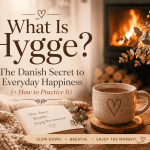
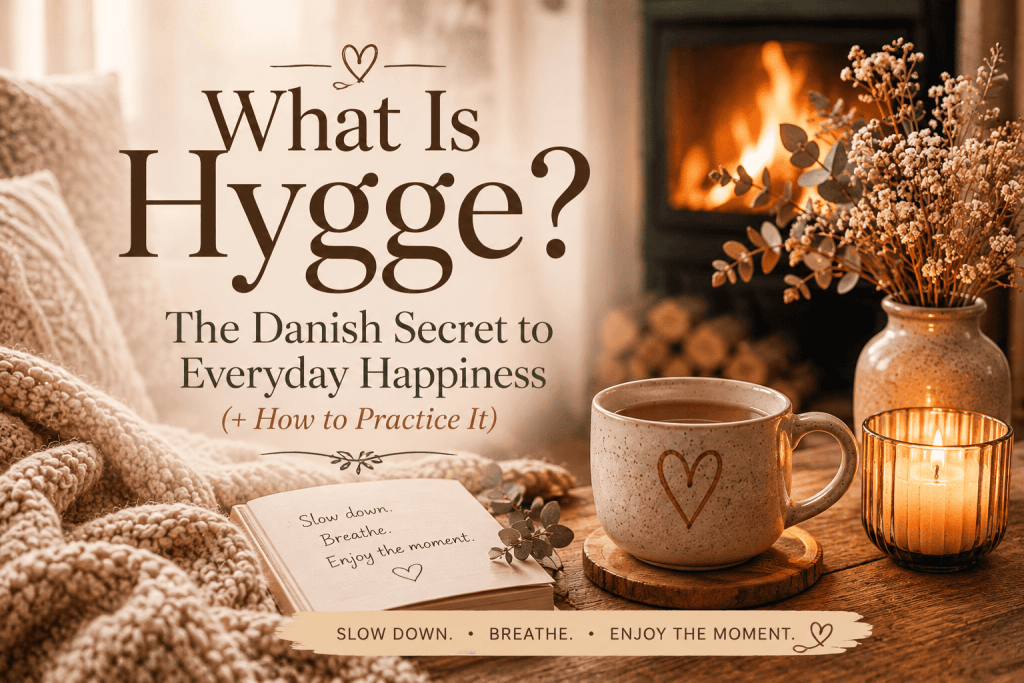
Hygge is less a single word and more a whole atmosphere: the warmth of candlelight, the comfort of a soft blanket, the ease of good company, and the quiet joy of simply being present in a moment instead of rushing through it.
Danes will often describe it less as a definition and more as a feeling. Ask ten different Danish people what hygge means to them, and you’ll get ten slightly different, equally heartfelt answers — a board game night with family, a mug of something warm on a rainy afternoon, candles lit even in the middle of the day.
It’s less about the what and more about the how it feels.
Where Does the Word Hygge Come From?
Hygge has been part of the Danish vocabulary since around the early 1800s, though its roots stretch back even further to an old Norwegian word associated with well-being. The history of the word is fascinating, but the modern idea of hygge is best understood as a Danish cultural concept centered around comfort, conviviality and enjoying simple moments.
It makes sense that hygge is strongly associated with Denmark’s long, dark winters. Rather than simply viewing the colder months as something to endure, Danish culture has developed many traditions around warm interiors, candlelight, shared meals, and time spent together.
The word really broke into the global conversation around 2016, when Danish happiness researcher Meik Wiking published The Little Book of Hygge, which became an international bestseller. Suddenly everyone from New York to New Delhi wanted a piece of that cozy Danish magic.
The Core Elements of Hygge
While hygge resists a tidy checklist, there are a handful of ingredients that show up again and again when people describe it:
- Warm, soft lighting. Think candlelight over harsh overhead bulbs.
- Togetherness. Hygge is often shared — a meal with people you love, an unhurried conversation, or a simple evening together.
- Comfort and texture. Soft blankets, comfortable clothing, cushions and other things that invite you to physically relax.
- Presence. Putting the phone down and being where your feet are. Hygge isn’t compatible with constantly rushing or multitasking.
- Simplicity. Hygge isn’t about spending money or acquiring things — it’s about appreciating what’s already around you.
Notice that not one of these requires a shopping cart.
Which brings us to a common misconception worth clearing up.
🌿 Explore the SproutHealth Wellness Shop
Visit SproutHealth.co
to shop our curated collection of wellness, home, beauty, fitness, and lifestyle essentials.
Discover thoughtful products designed to bring comfort, ease, and inspiration into your everyday life.
Hygge vs. “Cozy” — What’s the Difference?
It’s easy to assume hygge is just the Danish word for “cozy,” but there’s a subtle and important difference.
Cozy describes a feeling or a physical sensation — a soft couch, a warm sweater, a crackling fire. Hygge is broader; it’s a cultural concept and way of approaching everyday life that values comfort, connection, presence, and simple pleasures.
You can have a cozy blanket without ever practicing hygge. But you can’t really understand hygge without appreciating coziness, connection, and presence as things that matter — not as an afterthought, but as genuine ingredients of a good life.
There’s also a persistent myth that hygge is just a marketing trend — buy the right candle, the right chunky throw, and you’ve got it.
But that’s not really the heart of it.
Hygge is about how a moment makes you feel, not what you purchased to set the scene. The blanket helps, sure. But the feeling is the point.
Hygge vs. Lagom vs. Friluftsliv — Nordic Cousins Worth Knowing
If you’ve spent any time down the wellness-lifestyle rabbit hole, you may have come across a few other Scandinavian concepts that get mentioned in the same breath as hygge:
| Concept | Origin | Core Idea |
|---|---|---|
| Hygge | Denmark | Coziness, comfort and togetherness |
| Lagom | Sweden | “Not too much, not too little” — balance and moderation |
| Friluftsliv | Norway | A connection with outdoor life and nature |
They’re not interchangeable, but they share a common thread: a cultural instinct toward simplicity, balance and intentional living rather than excess.
If hygge is about creating warmth indoors, friluftsliv is almost its outdoor counterpart, while lagom reminds us that “enough” can sometimes be exactly right.
Is Hygge Only for Winter?
This is one of the most common misunderstandings, so let’s clear it up: hygge is absolutely not a winter-only concept.
Yes, it shines especially bright during the cold, dark months — there’s something about candlelight and hot drinks in December that just feels made for it.
But hygge shows up in every season.
Picture a summer picnic in the park with close friends. A slow bike ride at golden hour. A backyard barbecue where nobody’s checking their phone. An outdoor concert on a warm evening.
All of these can be hygge.
The setting changes, but the feeling of warmth, presence and connection remains.
The Wellbeing Side of Hygge
Hygge itself isn’t a medical treatment or a scientifically proven happiness formula. However, many of the simple activities associated with hygge — meaningful social connection, slowing down, spending time outdoors, taking breaks from screens and enjoying pleasant everyday experiences — overlap with areas that researchers have studied in relation to wellbeing.
Research consistently finds that social connection is associated with better wellbeing, while loneliness and social isolation are associated with poorer mental health and wellbeing. A large 2026 study using UK Biobank and genetic data found evidence that loneliness and social isolation can contribute to poorer mental health and wellbeing, while loneliness was also associated with poorer general health.
This doesn’t mean that lighting a candle or drinking tea will automatically make you happier. Rather, hygge offers a simple framework for making space for some of the everyday experiences that can support a more connected and intentional life.
There is also growing research into the relationship between time spent in natural environments and wellbeing. A 2026 systematic overview and second-order meta-analysis covering 116 systematic reviews found that nature-based interventions were associated with improvements in several psychological outcomes, although the researchers also noted important limitations in the existing evidence.
So perhaps the most useful lesson from hygge isn’t about serotonin, candles or creating the perfect Scandinavian-looking home.
It’s about intention.
Making time for people you care about. Creating moments of quiet. Stepping away from constant digital stimulation. Enjoying simple pleasures without feeling that every moment has to be productive.
For anyone dealing with the stress of a busy, overstimulated life, that can be a meaningful reminder: slowing down doesn’t have to mean doing nothing. Sometimes it means being fully present for what you’re already doing.
Slow Down. Reflect. Nurture Yourself.
Discover gentle digital wellness journals, trackers, and reflection tools created to help you bring a little more calm, clarity, and intention into everyday life.
Explore Sprout Health Studio on Etsy →
Thoughtful tools for intentional living
How to Practice Hygge in Everyday Life
The best part about hygge is that it costs little to nothing and fits into even the busiest life.
Here are some simple ways to bring more of it into your day:
- Light a candle, even on a random Tuesday. You don’t need an occasion.
- Put the phone away for one meal a day. Full presence, even briefly, can change the texture of a moment.
- Create a cozy corner. A comfortable chair, a soft throw, good lighting and a stack of books can create a small dedicated spot for slowing down.
- Make a hot drink and actually sit with it. No multitasking. Just the mug, the warmth and a few quiet minutes.
- Invite someone over for something simple. Hygge doesn’t require a dinner party — soup and good conversation is plenty.
- Dress for comfort at home. Soft, well-loved clothing can become part of the ritual.
- Bring in natural textures. Wood, wool, linen and ceramics can help create a warm and grounded atmosphere.
- Slow down one meal a week. No rushing, no screens — just the food and the people at the table.
None of these require a Pinterest-perfect home or a big budget.
Hygge is far more forgiving than it looks in photos — it’s really about intention, not aesthetics.
Building a Hygge-Inspired Home
If you do want to bring a bit more hygge into your physical space, a few small shifts can go a long way:
- Lighting: Swap bright white bulbs for warmer lighting and keep candles within easy reach.
- Textiles: Layer in soft throws, cushions and rugs that feel comfortable underfoot.
- Color palette: Lean into warm neutrals — creams, soft browns and muted greens — rather than stark, cool tones.
- Natural materials: Wood, wool and ceramic pieces can feel grounded and inviting.
- Small rituals over big purchases: A well-loved reading nook matters more than an expensive redecoration. Hygge rewards intention, not spending.
A Few Simple Hygge Rituals to Try This Week
If you want to ease into this rather than overhaul your whole life overnight, try picking just one or two:
- Light a candle during your morning coffee instead of scrolling your phone.
- Plan one screen-free dinner with someone you love.
- Spend twenty quiet minutes with a warm drink and a good book.
- Take an unhurried walk outside, just to notice the season around you.
- Swap one bright light in your home for something warmer and softer.
Small, repeatable and genuinely enjoyable — that’s the whole point.
Hygge and Modern Life — Why We Need It More Than Ever
There’s a reason hygge has found such an eager audience outside Denmark. Many of us live permanently plugged in, permanently rushed and constantly surrounded by notifications.
Notifications pinging at dinner. Scrolling in bed instead of sleeping. Meals eaten standing over the sink because there’s “no time.”
Hygge offers a quiet counterpoint to all of that — a gentle reminder that slowing down is not the same as falling behind.
It doesn’t ask you to overhaul your schedule or take a two-week vacation you can’t afford.
It asks for twenty quiet minutes with a cup of tea. One screen-free dinner. A single candle lit with intention instead of ten unread emails glowing on a screen.
Hygge meets you exactly where you are, in the middle of an ordinary Tuesday, and gently reminds you that comfort doesn’t have to wait for a special occasion.
There’s also something worth noting about the social side of hygge that can get lost when it’s marketed purely as a home-decor aesthetic.
So much of hygge is genuinely about people — sitting around a table with no particular agenda, letting a conversation wander, being fully present with someone instead of half-present while your mind runs through tomorrow’s to-do list.
Research on social connection supports the broader importance of relationships for wellbeing, although that research should not be interpreted as proof that hygge itself causes better health.
In a culture that often equates busyness with importance, choosing unhurried togetherness can be a small but meaningful act of resistance.
Common Hygge Myths, Debunked
Because hygge has become such a popular aesthetic online, a few myths tend to stick around.
Let’s clear a few up:
- Myth: Hygge requires spending money on the “right” products.
Reality: Candles and blankets can support the mood, but they’re not the source of it. A shared laugh over tea in mismatched mugs is just as meaningful as a styled Instagram flat-lay. - Myth: Hygge is only about being alone and cozy.
Reality: Solitude can absolutely be hygge, but so can a lively dinner with friends. It’s about the quality of presence, not the number of people in the room. - Myth: Hygge is a Scandinavian design trend.
Reality: It’s a cultural practice and mindset first, and a design aesthetic second. - Myth: You need a fireplace, a Danish apartment or a snowy backdrop to practice hygge properly.
Reality: Hygge is remarkably adaptable. A small apartment, a warm mug and twenty uninterrupted minutes are more than enough.
Final Thoughts
At its heart, hygge isn’t a trend, a shopping list or something you can buy your way into.
It’s a reminder that a good life can be built from small, warm, unhurried moments — a candle, a shared meal, a quiet hour with a book or the comfort of being fully present, even for a little while.
You don’t need a trip to Copenhagen to experience it.
You just need to slow down enough to notice that a little comfort, connection and presence may already be within reach.
Create Your Own Hygge-Inspired Sanctuary
You don’t need to redesign your home to experience hygge. A few thoughtful details can make an ordinary evening feel warmer and more intentional.
At SproutHealth.co, we curate home and wellness essentials inspired by the idea of creating a personal sanctuary — from soft ambient lighting to comforting everyday pieces.
A few pieces that complement a hygge-inspired ritual:
🕯️ Premium Candle Warmer Lamp — A beautiful way to create a warm, cozy atmosphere while enjoying your favorite candle without an open flame.
☕ Mineral Resin Coffee Mug — Perfect for a slow morning coffee, tea or an unhurried evening drink.
💡 Cozy Lights & Sanctuary Collection — Explore ambient lighting and home-wellness pieces designed to help create a softer, more peaceful atmosphere.
The goal isn’t to buy more. It’s to create more moments that feel good. Choose what genuinely adds comfort and meaning to your everyday rituals.
Frequently Asked Questions
How do you pronounce hygge?
Hygge is pronounced “hoo-gah.” It’s a Danish word, and while the spelling looks tricky at first, the pronunciation is simpler than it appears.
What is the literal meaning of hygge?
There’s no exact English translation, but hygge is generally used to describe a feeling or atmosphere of coziness, comfort, conviviality and wellbeing.
Is hygge only a winter thing?
No. While hygge is especially associated with candlelit winter evenings, it can be practiced year-round — summer picnics, bike rides and outdoor gatherings can all capture the spirit of hygge.
What’s the difference between hygge and cozy?
Cozy describes a feeling or physical sensation, such as the comfort of a warm blanket. Hygge is broader, encompassing coziness, presence, togetherness and simple pleasures.
What’s the difference between hygge and lagom?
Hygge is Danish and centers on coziness, comfort and togetherness. Lagom is Swedish and is associated with balance and moderation — “not too much, not too little.”
How can I add hygge to my home on a budget?
Start small: warm lighting, a soft blanket, a designated cozy corner and natural materials such as wood or wool. Hygge is about intention, not expensive décor.
What are some simple hygge activities?
Lighting candles, sharing an unhurried meal, reading with a warm drink, taking a slow walk or spending screen-free time with people you love are all simple ways to bring more hygge into everyday life.
Why are Danish people so happy?
There isn’t one explanation for Denmark’s relatively high happiness rankings. Social relationships, economic conditions, work-life balance, public institutions and many other factors all contribute to population wellbeing. Hygge may be one cultural practice associated with everyday comfort and connection, but it should not be presented as the single reason for Danish happiness.
What book should I read to learn more about hygge?
The Little Book of Hygge by Meik Wiking is a popular introduction to the concept and helped bring hygge to a global audience.
Can hygge help with stress or anxiety?
Hygge isn’t a replacement for professional mental-health support or treatment. However, activities associated with hygge — such as slowing down, spending time with supportive people and creating moments of quiet — can be incorporated into a broader healthy lifestyle.
Research & Further Reading
I recommend putting this section below the article, just as you requested. These are genuine research papers rather than generic wellness websites:
- Hilliard et al. (2026), Nature Communications — Loneliness, social isolation and health
Large UK Biobank/genetic analysis examining loneliness, social isolation, mental health, wellbeing and general health. - Holt-Lunstad et al. — Why Social Relationships Are Important for Physical Health
A major review examining the relationship between social connection, health and longevity. - English Longitudinal Study of Ageing — Social connections and subjective wellbeing
Longitudinal research examining isolation, loneliness and wellbeing over six years. - Saeedy Robat et al. (2026), Nature Human Behaviour — Nature-based interventions and wellbeing
A systematic overview and second-order meta-analysis examining nature-based interventions and outcomes including stress, anxiety, depression, positive affect and relaxation. - Kass et al. — Effect of nature exposure on perceived and physiologic stress
A systematic review examining research on nature exposure and measures of perceived and physiological stress. - BMJ Open — Social connection and health
An umbrella review of meta-analyses examining social connection and physical and mental health outcomes.