



Social media is part of our everyday lives, shaping how we connect and see ourselves. It can inspire and uplift, but it can also overwhelm and affect our wellbeing. By recognizing both its gifts and its challenges—and practicing mindful habits—we can create a healthier, more balanced digital experience.

The Positive Impacts of Social Media
Social media, when used intentionally, can be a powerful ally in mental health.
- Community building: For many, social media is a lifeline. It bridges geographical gaps, allowing us to find like-minded souls, whether it’s a yoga group, a pet parent community, or a mental health support forum.
- Access to resources: Therapy accounts, wellness influencers, and awareness campaigns provide free education and coping strategies that were once hard to access.
- Destigmatization: Conversations about depression, anxiety, and trauma are no longer hidden. Social media normalizes therapy and encourages people to seek help.
- Peer support groups: Safe spaces online allow individuals to share experiences, find encouragement, and feel less alone.
I once came across a young woman who shared her journey of overcoming postpartum depression on Instagram. Her openness not only helped her heal but also gave thousands of mothers the courage to seek support. This is the beauty of social media—it can transform vulnerability into collective strength.
🌑 The Negative Impacts of Social Media
Of course, the digital world has its shadows.
- Social comparison: Curated highlight reels often fuel feelings of inadequacy. We compare our behind-the-scenes to someone else’s polished front stage.
- Cyberbullying: Online harassment can lead to anxiety, depression, and even suicidal ideation, especially among teens.
- Addiction and screen time: Endless scrolling disrupts sleep, increases stress, and reduces productivity.
- FOMO (Fear of Missing Out): Constant exposure to others’ activities can heighten anxiety and dissatisfaction.
📊 Did you know? A 2023 study found that teens spending more than 3 hours daily on social media were twice as likely to report symptoms of depression. Numbers like these remind us that balance is not optional—it’s essential.
👥 Age-Specific Considerations
- Teens and young adults: Most vulnerable to comparison and bullying, yet they also benefit from peer support and awareness campaigns.
- Adults: Often juggle professional networking with wellbeing, facing burnout from constant connectivity.
- Older adults: Use social media for connection but risk misinformation and digital isolation.
A senior woman I met through a wellness forum shared how Facebook groups helped her cope with loneliness after retirement. But she also admitted falling prey to misinformation about health remedies. Her story highlights the double-edged nature of social media.
🌱 Strategies for Healthy Social Media Use
Here’s how we can reclaim our digital wellbeing:
- Digital detox: Scheduling breaks from social media reduces stress and improves focus.
- Mindful engagement: Follow uplifting accounts, unfollow toxic ones, and curate your feed with intention.
- Platform responsibility: Social media companies must enforce policies against harmful content.
- Personal boundaries: Set time limits, avoid doomscrolling, and prioritize offline connections.
Practical tip: Try the “20-20-20 rule.” Every 20 minutes of scrolling, pause for 20 seconds, and look at something 20 feet away. It’s simple, but it helps reset both your eyes and your mind.
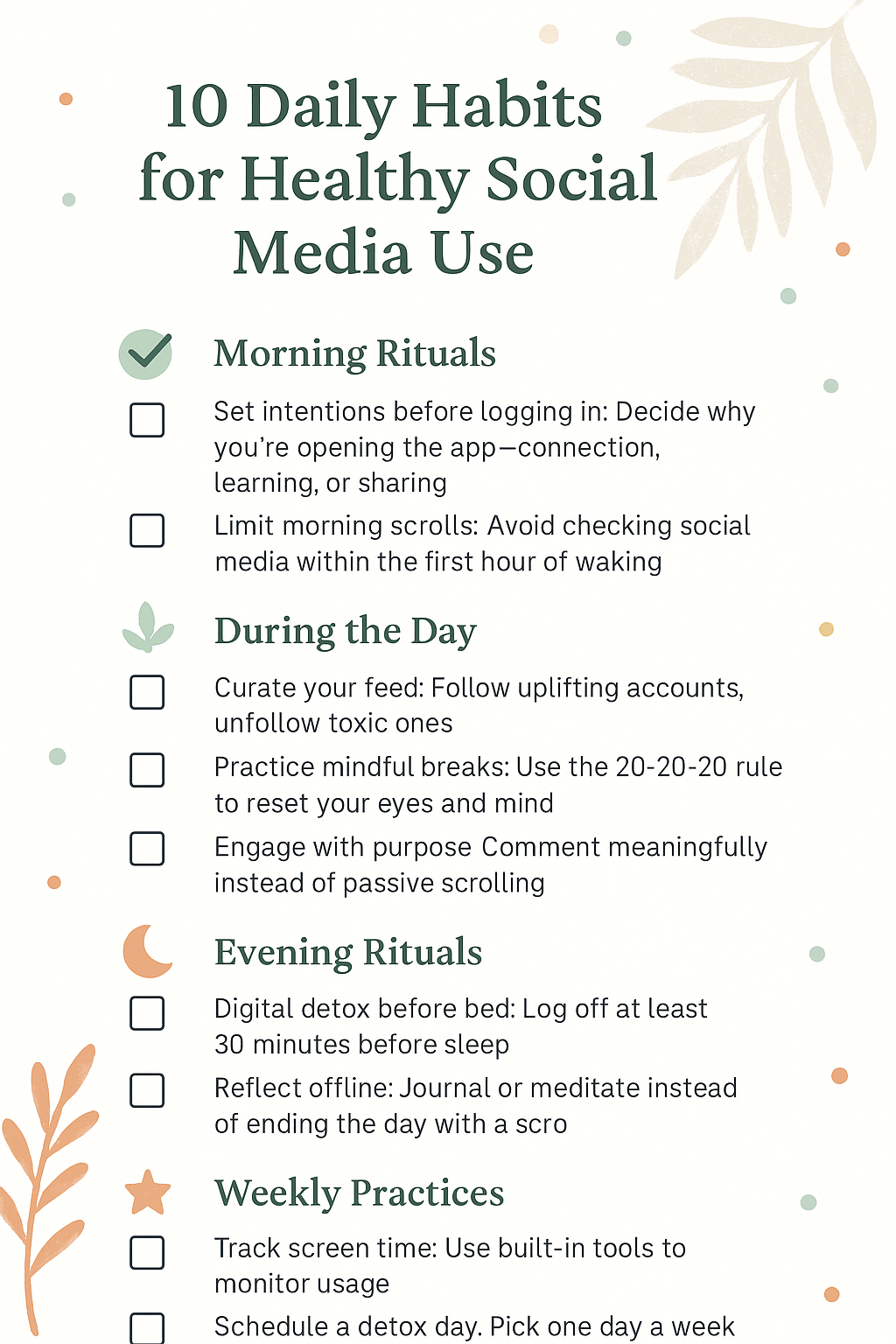
Ready to reclaim your digital peace? Download this beautifully designed checklist: “10 Daily Habits for Healthy Social Media Use” 🌸 Perfect for printing, journaling, or pinning to your wellness board. Let it guide you toward mindful scrolling, intentional connection, and emotional clarity—one habit at a time.
📥 Click the link to download your free printable and start your digital detox journey today!
Conclusion
Social media is neither inherently good nor bad—it is a mirror reflecting how we choose to engage with it. When used mindfully, it can be a powerful tool for connection, awareness, and healing. When consumed unconsciously, it can erode self-esteem and wellbeing.
As I often remind my community, your digital life should enrich, not deplete you. By setting boundaries, curating your feed, and embracing mindful practices, you can transform social media into a force for good in your mental health journey.
❓ FAQs
Q1: How does social media affect mental health positively? It fosters connection, reduces loneliness, and provides access to mental health resources and awareness campaigns.
Q2: What are the negative effects of social media on mental health? Excessive use can lead to anxiety, depression, social comparison, cyberbullying, and disrupted sleep patterns.
Q3: Can social media help reduce stigma around mental illness? Absolutely. Platforms allow open conversations, normalize therapy, and amplify voices advocating for mental health awareness.
Q4: How can I use social media mindfully? Set time limits, follow uplifting accounts, avoid toxic spaces, and take regular digital detoxes.
Q5: Is social media addiction real? Yes. Excessive use can mimic addictive behaviors, impacting sleep, productivity, and emotional wellbeing.