

There is something about looking at your face in the bathroom mirror after 50 that can make you pause.
I remember those moments when I would look a little more closely and wonder, When did my skin become so different?
The softness seemed different.
The glow wasn’t quite the same.
Fine lines that once appeared only when I smiled seemed to have become permanent little visitors.
And then there was the dryness.
Suddenly, the products that had worked perfectly well for years didn’t seem to be doing quite enough anymore.
Perhaps you’ve experienced something similar.
Maybe you’ve spent money on an expensive jar promising youthful-looking skin, only to discover that the results were considerably less dramatic than the advertisement suggested.
I know that feeling.
Sometimes skincare marketing sells us a little jar of hope for $68—and somehow we convince ourselves that this time it will be the one.
But here’s something I’ve learned.
Our skin isn’t necessarily “failing” us as we get older. It’s changing.
And menopause can be an important part of that story.
The hormonal changes of perimenopause and menopause can affect the skin’s moisture, elasticity, thickness and overall appearance. At the same time, years of sun exposure and the normal aging process continue to leave their mark.
So perhaps the goal shouldn’t be to fight every line.
Perhaps the goal is to understand what our skin needs now.
Let’s take a closer look at what changes after 50, what skincare ingredients are actually worth considering, and how we can create a simple routine without turning our bathroom into a laboratory.
What happens to your skin during menopause?
Menopause is officially reached after 12 consecutive months without a menstrual period, but the hormonal transition begins years earlier during perimenopause.
One of the most important changes is the decline in estrogen.
Estrogen affects many parts of the body, and the skin is no exception.
During the menopausal transition, declining estrogen is associated with changes in skin thickness, hydration, collagen and elasticity.
You may notice:
- Drier skin
- Increased sensitivity
- More visible fine lines
- Changes in elasticity
- A feeling that your skin is thinner
- Increased dryness or irritation
- Changes in pigmentation
- More noticeable texture
And suddenly, the skincare routine that worked in your 30s may not feel quite right anymore.
This doesn’t mean you need 15 new products.
In fact, I would argue the opposite.
Mature skin often benefits from simplicity.
The biggest skincare mistake after 50
If I could give one piece of advice to women building a skincare routine after 50, it would be this:
Don’t try to attack every sign of aging at once.
When we see wrinkles, dryness, pigmentation and dullness appearing together, it can be tempting to buy an exfoliating acid, retinol, vitamin C serum, peptide cream, overnight mask and three different moisturizers.
And then we wonder why our skin is irritated.
Your skin has a barrier.
That barrier deserves respect.
As we age, dryness can become more noticeable, and the American Academy of Dermatology recommends regular moisturizing as part of a mature skincare routine.
So instead of asking:
“How can I make my skin look younger overnight?”
I prefer asking:
“How can I help my skin stay healthy, comfortable and protected?”
That small change in mindset can completely transform your skincare routine.
Step 1: Sunscreen is still your best anti-aging product
If there is one product I would never want to remove from a mature woman’s skincare routine, it is sunscreen.
And I know—this isn’t nearly as exciting as a $200 serum.
But it matters.
Ultraviolet radiation contributes significantly to premature skin aging, often called photoaging.
The American Academy of Dermatology recommends broad-spectrum sunscreen with SPF 30 or higher as part of sun protection.
So, every morning:
Cleanse → moisturize if needed → sunscreen.
Choose a sunscreen you actually enjoy wearing.
If you dislike the texture, you’ll probably skip it.
If a particular formula feels comfortable, doesn’t leave you uncomfortable or irritated, and works well with your skin tone, you’re much more likely to use it consistently.
And consistency is far more valuable than owning an expensive bottle that sits untouched in your bathroom cabinet.
Don’t forget your neck, chest and the backs of your hands.
They often tell the story of sun exposure too.
Step 2: Give dry skin some kindness
One of the most common complaints after menopause is dryness.
If your skin suddenly feels tight after washing, your cleanser may be part of the problem.
You don’t necessarily need a cleanser that leaves your face feeling “squeaky clean.”
That squeaky feeling isn’t necessarily a sign that your skin is beautifully clean.
It may simply mean you’ve removed too much of its natural oil.
Try a gentle cleanser and follow with a moisturizer.
Look for moisturizing ingredients such as:
- Ceramides
- Glycerin
- Hyaluronic acid
- Squalane
- Petrolatum
- Other ingredients designed to support the skin barrier
You don’t need every ingredient in one bottle.
Find something your skin tolerates well.
Step 3: Retinol can help—but go slowly
Retinoids and retinol have a much stronger evidence base than many of the trendy ingredients appearing on social media.
They can help improve the appearance of fine lines, uneven texture and some signs of photoaging.
The American Academy of Dermatology recognizes retinoids and retinol as useful options in anti-aging skincare.
But there is a catch.
More is not better.
Especially if your skin is already dry or sensitive.
If you are new to retinol, start slowly.
A small amount a few nights a week may be more sensible than applying a strong product every night and waking up with irritated, peeling skin.
Moisturizer can be your friend.
And sunscreen becomes even more important when you’re using products that can increase skin sensitivity.
If you have eczema, rosacea, very sensitive skin, or another skin condition, speak with a dermatologist before introducing strong active ingredients.
What about prescription retinoids?
Prescription retinoids are stronger than over-the-counter retinol products.
They can be highly effective for certain skin concerns, but they aren’t appropriate for everyone.
If you’re looking for more significant treatment of photoaging, pigmentation or other skin concerns, a dermatologist can help determine whether a prescription retinoid is suitable for you.
This is one area where I would rather spend money on a professional consultation than on five random products recommended by an influencer.
Step 4: What about vitamin C?
Vitamin C is another popular skincare ingredient—and for good reason.
Topical vitamin C has antioxidant properties and can help support a skincare routine focused on photoprotection and uneven pigmentation.
But vitamin C products can vary considerably.
Some formulas are unstable or irritating.
If your skin is sensitive, start cautiously.
And remember:
Vitamin C is not a substitute for sunscreen.
Think of antioxidant skincare as an addition to your routine—not a replacement for sun protection.
Step 5: Peptides are interesting—but don’t expect miracles
Peptides have become very popular in skincare.
You’ll find them in serums, moisturizers and eye creams promising everything from firmer skin to dramatic rejuvenation.
There is scientific interest in peptides and their potential role in supporting the appearance of aging skin.
But I think it’s important to keep expectations realistic.
A peptide moisturizer isn’t going to erase 20 years of skin aging.
And that’s okay.
A good skincare product doesn’t have to perform miracles to be worthwhile.
If it helps your skin feel softer, more hydrated and comfortable, that’s already useful.
What about bakuchiol?
Bakuchiol is often described as a plant-based alternative to retinol.
It is an interesting ingredient, particularly for women who find retinoids irritating.
Some clinical research has suggested that topical bakuchiol may improve certain signs of photoaging, including wrinkles and pigmentation.
But here’s the part that often gets lost in the beauty industry’s enthusiasm:
The evidence base for bakuchiol is considerably smaller than the evidence base for retinoids.
So I would describe bakuchiol as an interesting option—not a miracle replacement.
If you have sensitive skin and want to try it, introduce it gradually and see how your skin responds.
Collagen supplements: worth it?
Ah, collagen.
Walk into almost any beauty aisle and you’ll find powders, gummies, drinks and capsules promising to restore youthful skin from the inside out.
There is research suggesting that certain oral collagen peptides may modestly improve measures such as skin hydration and elasticity.
But the evidence isn’t strong enough to justify the enormous promises we sometimes see in advertisements.
And supplement quality varies.
This is another place where I remind myself:
Supplement marketing loves to round modest up to miraculous.
If you are considering collagen, discuss it with your healthcare professional, particularly if you have medical conditions, take medications or have dietary restrictions.
And don’t let collagen supplements replace actual food.
Your skin needs a nourishing overall diet.
Beauty really does begin with nourishment
This is where I think women deserve a more holistic conversation.
We sometimes spend hundreds of dollars on skincare while forgetting the simple things our bodies need every day.
Adequate protein.
Colorful vegetables.
Fruit.
Whole grains.
Healthy fats.
Enough fluids.
Foods rich in vitamin C and other nutrients.
A varied, balanced eating pattern supports overall health—and healthy skin is part of that picture.
Protein is especially important as we age because maintaining muscle becomes increasingly important for healthy aging.
So rather than asking:
“What supplement will make me look younger?”
I prefer:
“Am I nourishing my body well?”
That question has much more power.
And please don’t underestimate sleep
I know.
We hear about sleep constantly.
But there is a reason.
If you’re going through perimenopause or menopause, sleep can become difficult because of night sweats, hot flashes, anxiety, changing sleep patterns and other symptoms.
And when you’re chronically exhausted, everything feels harder.
Your skincare routine.
Your eating habits.
Your exercise.
Your mood.
Your patience.
Your motivation.
So if you’re investing in a beautiful night cream but sleeping five hours a night, perhaps your body is asking for something else first.
Sometimes the most luxurious beauty treatment is simply rest.
Stress and your skin
Stress doesn’t magically create every wrinkle on your face.
But chronic stress can affect the body in many ways, and stress-related behaviors—poor sleep, less physical activity, changes in eating patterns and neglecting self-care—can all influence how we feel and how our skin looks.
This is why I love the idea of skincare as a ritual rather than another task.
Instead of rushing through your evening routine:
Slow down.
Wash your face gently.
Apply your moisturizer.
Take a few deep breaths.
Put your phone down.
Let those five minutes become a tiny sanctuary.
Your skincare routine doesn’t have to be another productivity project.
What about facial massage?
Facial massage can feel wonderful.
It may temporarily help with relaxation and the appearance of puffiness, and for many women the real benefit is simply creating a calming ritual.
But let’s keep our expectations realistic.
Massage isn’t going to rebuild lost collagen or permanently lift facial tissues.
And that’s okay.
Not everything has to produce a dramatic biological transformation to be worthwhile.
Sometimes self-care is valuable simply because it feels good.
A simple skincare routine for women over 50
If your bathroom shelf currently looks like a beauty store, let’s simplify.
Morning
1. Gentle cleanse—or simply rinse if appropriate for your skin
2. Vitamin C or another antioxidant serum, if your skin tolerates it
3. Moisturizer
4. Broad-spectrum SPF 30+ sunscreen
That’s enough.
Evening
1. Gentle cleanser
2. Retinol/retinoid or another active, if appropriate
3. Moisturizer
And if your skin is especially dry:
Moisturizer can be the star of the show.
You don’t need to use every active ingredient every night.
In fact, your skin may be happier when you don’t.
A little extra skincare ritual
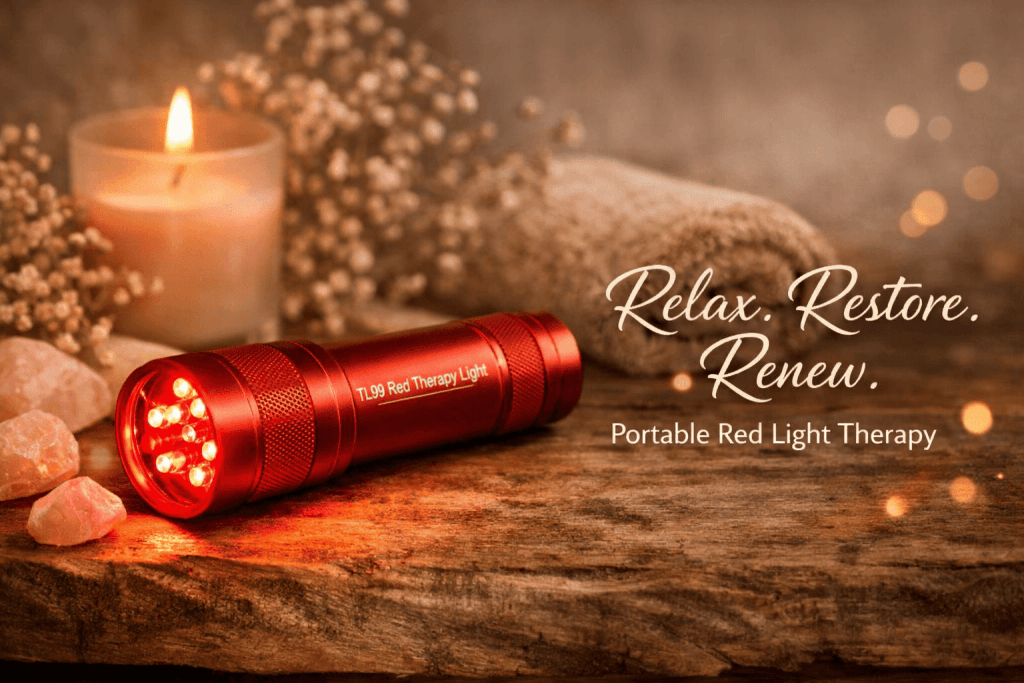
If you enjoy adding something special to your evening routine, you might also explore at-home LED light therapy.
LED devices are increasingly used as part of home skincare routines, but the evidence and effectiveness can vary depending on the wavelength, device, treatment schedule and the specific skin concern being targeted.
So choose carefully.
Look for clear product information, follow the manufacturer’s instructions and don’t assume that every colorful LED device has the same evidence behind it.
For some women, the appeal is also the ritual itself—a few quiet minutes to slow down and care for themselves.
At Sprout Health, I’ve been exploring wellness and beauty products that fit into this kind of gentle self-care approach.
The goal isn’t to fight aging.
It’s to create little rituals that help us feel cared for in the skin we’re living in today.
What about menopause hormone therapy and skin?
This is where the conversation becomes more complicated.
Estrogen has important effects on the skin, so it is understandable that women wonder whether menopausal hormone therapy can improve skin-related changes.
Menopausal hormone therapy can help with certain menopausal symptoms, particularly vasomotor symptoms such as hot flashes and night sweats, and estrogen has effects on bone and other tissues.
But hormone therapy should not be thought of simply as an anti-aging skincare treatment.
The decision to use hormone therapy is personal and depends on your age, symptoms, medical history, timing, type of therapy and individual risks and benefits.
There has also been an important regulatory development recently.
In November 2025, the U.S. FDA announced that it was initiating changes to remove broad boxed warnings from menopausal hormone therapy products. In February 2026, the FDA announced approval of labeling changes for the first group of products.
But this does not mean that hormone therapy is risk-free or appropriate for everyone.
The FDA has also stated that certain warnings remain, including the warning concerning endometrial cancer for systemic estrogen-alone products.
So please don’t interpret the newer labeling changes as:
“HRT is completely safe now.”
That isn’t the message.
The better message is:
Menopausal hormone therapy deserves an individualized, evidence-informed conversation rather than fear or blanket assumptions.
If you’re considering it for hot flashes, sleep disruption or other menopausal symptoms, speak with a qualified healthcare professional who can look at your personal circumstances.
And this is not a “start HRT for your wrinkles” message.
When should you see a dermatologist?
Not every skin change needs a dermatologist.
But there are times when professional advice is worthwhile.
Please consider seeing a dermatologist if you have:
- A new or changing mole
- A sore that doesn’t heal
- Persistent unexplained itching
- Significant redness or irritation
- Sudden changes in pigmentation
- A persistent rash
- Severe acne
- Rapid or unusual hair loss
- A skin concern that isn’t improving with gentle skincare
A dermatologist can also help you distinguish ordinary age-related changes from conditions that need treatment.
And if you are spending hundreds of dollars experimenting with products without getting results, a professional consultation may actually save you money.
You don’t have to look younger
I want to end with this because I think it matters.
We have been taught for decades that women should be terrified of aging.
Every line is a problem.
Every grey hair is something to hide.
Every change in our face requires correction.
Every birthday becomes something we apologize for.
I’m not interested in that message.
Of course, there is nothing wrong with wanting healthy, radiant skin.
There is nothing wrong with using retinol.
There is nothing wrong with sunscreen, moisturizer, vitamin C or a beautiful skincare ritual.
But there is a difference between caring for your skin and being at war with your face.
Your face has lived.
It has smiled.
It has cried.
It has laughed.
It has stayed awake with children.
It has worried.
It has celebrated.
It has carried you through ordinary mornings and extraordinary days.
Those lines aren’t evidence that you failed at aging.
They’re evidence that you lived.
My golden-years skincare philosophy
If I had to simplify everything I’ve learned into a few sentences, it would be this:
Protect your skin from the sun.
Keep your skin moisturized.
Use evidence-supported ingredients thoughtfully.
Introduce active ingredients slowly.
Eat nourishing food.
Move your body.
Sleep whenever you can.
Manage stress gently.
See a dermatologist when you need one.
And don’t let beauty marketing convince you that you need to buy your way out of getting older.
You don’t.
Maybe the real secret to looking gorgeous in your golden years isn’t looking 30 again.
Maybe it’s looking like yourself—healthy, cared for, comfortable and completely at home in your own skin.
That sounds beautiful to me.
Take care,
Swarnambal John
Founder of Holistic Wellness Hub | Nutrition & Wellness Writer
A Gentle Note
This article is for general educational purposes and is not intended to diagnose, treat or prevent any medical condition. Skincare ingredients, supplements and menopausal hormone therapy are not suitable for everyone. If you have a skin condition, are considering prescription treatments, or are thinking about hormone therapy or supplements, please speak with a qualified healthcare professional.
References & Further Reading
- American Academy of Dermatology. Skin care in your 40s and 50s.
- American Academy of Dermatology. Anti-aging skin care.
- American Academy of Dermatology. How dermatologists treat sun-damaged skin.
- U.S. Food & Drug Administration. FDA initiates removal of broad boxed warnings from menopausal hormone therapy products. November 10, 2025.
- U.S. Food & Drug Administration. FDA approves labeling changes for menopausal hormone therapy products. February 12, 2026.