

Hot flashes are not random—they’re your body’s way of communicating. That sudden wave of heat, the flushed skin, the racing heart—it’s not just “menopause happening.” It’s your body signaling that something deeper is shifting: inflammation, hormonal imbalance, or metabolic stress.
When we understand hot flashes as messages instead of symptoms, we can respond with compassion and strategy. They’re not punishments—they’re invitations to listen.
Inflammation & Estrogen Fluctuation
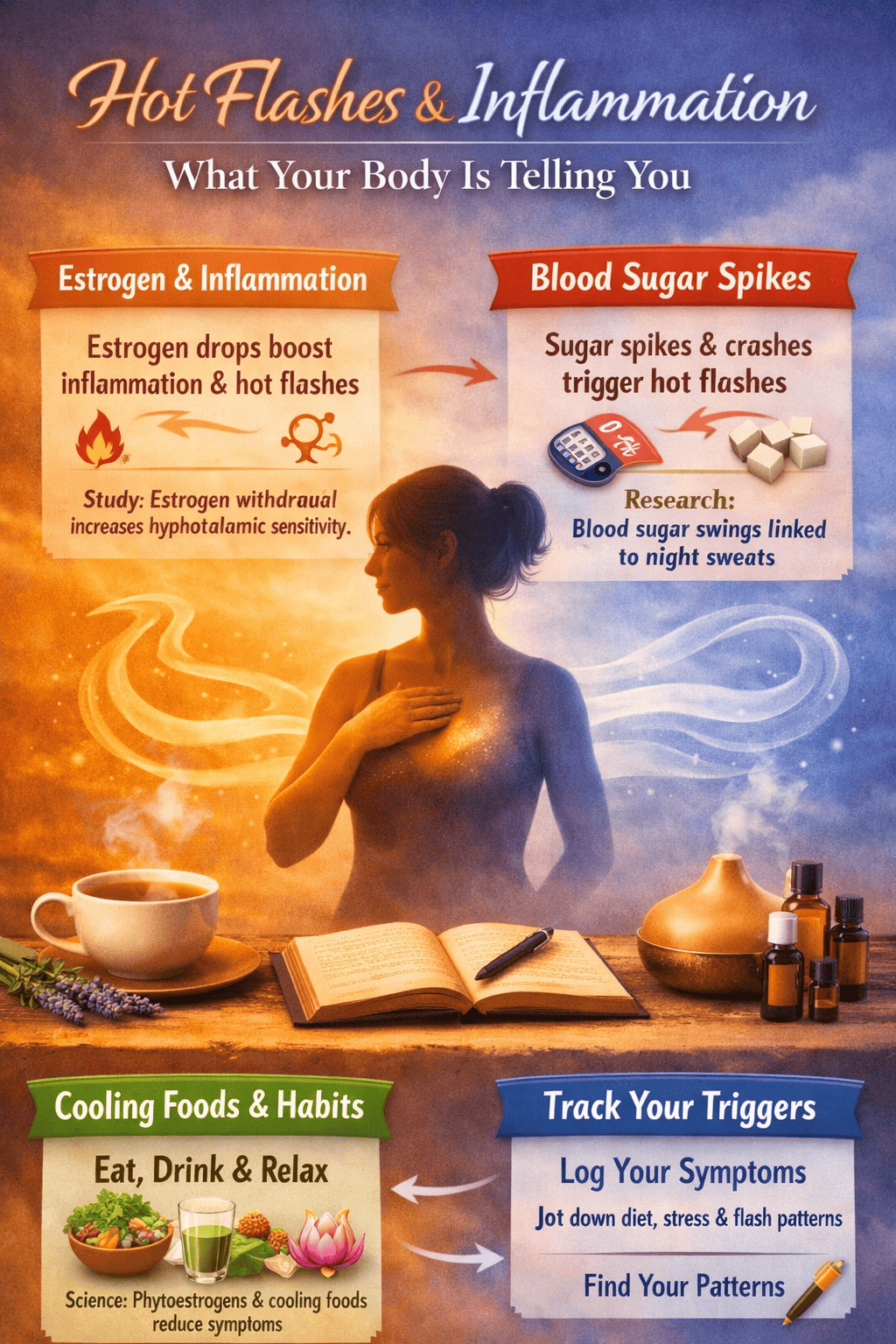
Estrogen is more than a reproductive hormone—it’s a regulator of inflammation, temperature, and mood. During perimenopause and menopause, estrogen levels fluctuate unpredictably, and that instability affects the hypothalamus, the brain’s thermostat.
When estrogen dips, inflammatory molecules called cytokines rise. These cytokines make the hypothalamus more sensitive, so even small temperature changes trigger exaggerated heat responses—your classic hot flash.
What’s Happening Inside
- Estrogen drop → inflammatory rise → hypothalamic sensitivity → heat surge.
- Chronic inflammation from stress, poor diet, or lack of sleep amplifies this cycle.
- The body’s cooling system becomes reactive, not regulated.
How to Support Balance
- Eat anti‑inflammatory foods: leafy greens, berries, turmeric, flaxseed, and omega‑3‑rich fish.
- Practice stress‑reduction techniques: meditation, yoga, or breathwork.
- Prioritize sleep hygiene—your hormones reset overnight.
When estrogen fluctuates, inflammation whispers louder. Listening to those whispers helps you restore calm before they become shouts.
🌿 Explore the SproutHealth Wellness Shop
Visit SproutHealth.co
to shop our curated collection of wellness, home, beauty, fitness, and lifestyle essentials.
Discover thoughtful products designed to bring comfort, ease, and inspiration into your everyday life.
Blood Sugar & Spikes
Few women realize how closely blood sugar and hot flashes are connected. Every spike and crash in glucose affects cortisol and insulin—two hormones that influence inflammation and temperature regulation.
The Blood Sugar–Hot Flash Connection
- High‑glycemic meals cause insulin surges, which increase cortisol and inflammatory markers.
- Low blood sugar later in the night triggers adrenaline, leading to night sweats and hot flashes.
- Unstable glucose keeps the nervous system on alert, making temperature swings more intense.
How to Stabilize
- Build meals around protein, fiber, and healthy fats.
- Avoid skipping meals—steady fuel keeps hormones balanced.
- Limit refined carbs and sugary snacks, especially in the evening.
- Try a balanced bedtime snack (like almond butter on whole‑grain toast) to prevent overnight dips.
Balanced blood sugar means balanced heat regulation. When your glucose curve smooths out, your nights often cool down.
Cooling Foods & Lifestyle Habits
Cooling foods and habits help calm inflammation and regulate body temperature naturally.
Cooling Foods
- Leafy greens (spinach, kale, arugula) support detoxification.
- Cucumber, mint, and watermelon hydrate and cool.
- Flaxseed and soy provide gentle phytoestrogens that mimic estrogen’s calming effects.
- Avoid spicy foods, caffeine, and alcohol before bed—they raise internal heat.
Lifestyle Habits
- Hydration: Sip water throughout the day, not just at night.
- Gentle movement: Yoga, walking, or stretching regulate circulation and reduce stress.
- Mindfulness: Deep breathing lowers cortisol and stabilizes temperature.
- Sleep environment: Keep your bedroom cool, use cotton sheets, and wear breathable fabrics.
Herbal Allies
- Black cohosh and red clover may support hormonal balance.
- Evening primrose oil can soothe inflammation. (Always consult a professional before adding supplements.)
Cooling your body starts with cooling your lifestyle—small, consistent choices that tell your nervous system: You’re safe.
Tracking Triggers
Every woman’s body speaks a slightly different language. Tracking your hot flashes helps you translate it.
What to Track
- Time and intensity of hot flashes.
- Meals and snacks—especially sugar, caffeine, or alcohol.
- Stress levels and emotional triggers.
- Sleep quality and bedtime habits.
How to Track
Use a wellness journal or an app to record patterns. Over time, you’ll see connections—perhaps caffeine triggers morning flashes, or stress heightens evening ones.
Why It Matters
Tracking transforms frustration into insight. It helps you personalize your routine, identify triggers, and celebrate progress.
💬 FAQs
Q1: Why do hot flashes happen mostly at night? Because cortisol and blood sugar fluctuate overnight, and body temperature naturally rises during REM sleep. Hormonal imbalance amplifies these effects.
Q2: Can inflammation alone cause hot flashes? Yes. Systemic inflammation can heighten sensitivity in the hypothalamus, even outside menopause.
Q3: Are hot flashes linked to diet? Absolutely. High‑sugar, processed, or spicy foods can trigger temperature spikes and inflammation.
Q4: How long do hot flashes last? They can persist for several years post‑menopause but often lessen with lifestyle and hormonal balance.
Q5: What’s the best way to cool down quickly? Deep breathing, hydration, and applying a cool compress to pulse points help regulate temperature fast.
Q6: Can stress management really help? Yes. Stress raises cortisol, which increases inflammation and temperature sensitivity. Calming the mind cools the body.
Q7: Should I avoid exercise? Not at all—gentle movement helps regulate hormones and reduce inflammation. Just avoid intense workouts close to bedtime.

“Grab the Menopause Journal Tracker Bundle today and get the Self‑Compassion Journal completely free — your wellbeing deserves this.”
🌿 Emotional Resonance: Listening to the Body’s Language
Hot flashes are not failures—they’re feedback. They remind us that the body is alive, responsive, and asking for balance.
When we respond with nourishment, rest, and mindfulness, we transform discomfort into dialogue. Each flash becomes a message: Slow down. Hydrate. Breathe. Restore.
This is the essence of holistic wellness—listening, not fighting.
✨ Conclusion: Cooling from Within
Hot flashes and inflammation are intertwined signals of change. They reveal how deeply hormones, metabolism, and emotions are connected.
By stabilizing blood sugar, reducing inflammation, and embracing cooling foods and habits, you can turn those fiery moments into gentle reminders of resilience.
Your body isn’t betraying you—it’s guiding you toward balance.
Related reading: part of our Complete Guide to Perimenopause and Menopause